
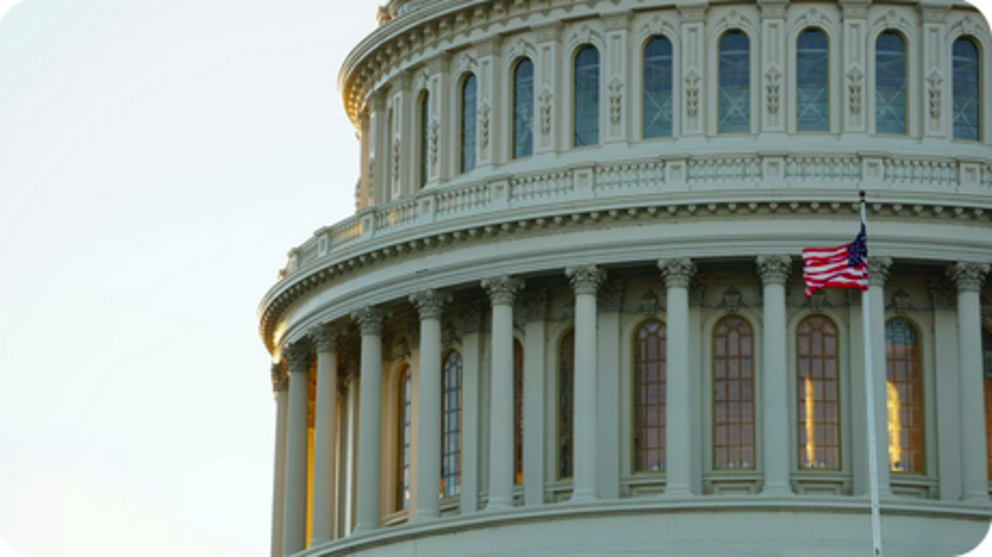
UFO transparency stalls again as congressional leaders fail to act despite growing attention
Congressional leadership has abandoned full enactment of the proposed Unidentified Anomalous Phenomena Disclosure Act (UAPDA) after it was not included in the final National Defense Authorization Act (NDAA) for fiscal year 2026, due to be signed by President Trump.
Liberation Times understands that the proposed legislation—first introduced in 2023 by then-Senate Majority Leader Chuck Schumer (Democrat) and Senator Mike Rounds (Republican), a member of the Senate Intelligence and Armed Services Committees—now faces an uncertain future.
After initial resistance in 2023—reportedly from some in House and Senate leadership—a mostly gutted version of the UAPDA was ultimately enacted via the 2024 NDAA.
In response, Senators Schumer and Rounds entered into a colloquy on the Senate floor expressing their disappointment with House Republicans and pledged to continue pursuing the full legislation, including the creation of an independent Review Board: a nine-member panel of U.S. citizens appointed by the President, and confirmed by the Senate.
Under the proposal, the Board would have authority to assess and advise on the public release of UAP-related information and records, alongside provisions requiring the government to secure possession of any recovered UAP material and related biological evidence that may have been transferred to private entities—potentially placing it beyond the reach of Congress and the American public.
During the Schumer-Rounds colloquy, which took place in December 2023, Schumer stated:
“I want to assure the American people [that] Senator Rounds and I will keep working to change the status quo.”
Schumer added:
“I would like to just acknowledge my dear friend, the late Harry Reid, a mentor who cared about this [UAP transparency] issue a great deal - so he is looking down and smiling on us, but he is also importuning us to get the rest of this done, which we will do everything we can to make happen.”
However, despite being reintroduced in 2024 and again this year, the UAPDA has not been included in the final NDAA and has not been passed into law. Moreover, both Senators Rounds and Schumer have been relatively muted—at least publicly—in pressing for its adoption.
That is notable given their earlier comments attributing setbacks to the House.
As recently as September 2025, Senator Rounds suggested the provision was acceptable in the Senate but continued to face obstacles in the House. Yet this time, the language did not even appear in the Senate’s version of the NDAA.
Other lawmakers long associated with UAP oversight, and who co-sponsored the UAPDA, have done little to publicly advocate for further transparency include Senator Kirsten Gillibrand (Democrat)—who has helped drive congressional mandates and Senate oversight of the Pentagon’s All-domain Anomaly Resolution Office (AARO)—and Secretary of State Marco Rubio (Republican) - a former senator - who is currently serving as President Trump’s acting National Security Adviser.
Despite heightened public attention around allegations of UAP retrieval and reverse-engineering programs, recent momentum for major transparency measures appears to have slowed.
For example, the House Permanent Select Committee on Intelligence (HPSCI)—now under Republican control—held the first UAP public hearing for over 50 years in May 2022, when under Democrat control.
Since then, its posture on transparency appears to have shifted, with reports that then-HPSCI Chair Mike Turner (Republican) opposed key elements of the UAP Disclosure Act during the 2023 NDAA Conference Committee negotiations.
A similar pattern is evident in the Senate Armed Services Committee, where its subcommittees held public oversight hearings with AARO leadership in 2023 and 2024 while Democrats controlled the gavel, but no comparable public hearing took place in 2025 after Republicans assumed control.
By contrast, the Republican-led House Oversight Committee has continued to stage UAP-themed hearings, including through its Task Force on the Declassification of Federal Secrets.
However, Oversight has limited influence over whether UAP provisions ultimately make it into statute, because the two vehicles that matter most are controlled elsewhere: the NDAA is produced by the House and Senate Armed Services Committees, while the Intelligence Authorization Act (IAA) is handled through the intelligence committees and is often folded into the final NDAA package.
Representative Eric Burlison (Republican) has signalled just how little appetite there is within congressional leadership to advance the UAPDA absent broad, senior-level buy-in.
Speaking to journalist Matt Laslo, Burlison said he had been told by House Armed Services Chair Mike Rogers (Republican) that the provision could be included in the NDAA only if Burlison could secure agreement from the “Four Corners” — the Chair and Ranking Members of the House and Senate Armed Services and Intelligence Committees. This was a herculean task set by Representative Rogers, which was destined to fail.
In practice, that condition indicated the measure was not being championed from the top down; instead, it would advance only if Burlison could assemble a consensus across the key authorising and intelligence gatekeepers—an outcome that ultimately proved elusive.
The wider implication is that the Trump White House has not thrown its weight behind meaningful measures to scrutinise allegations that vehicles of non-human or otherwise unknown origin have been recovered and transferred to national laboratories and private defence contractors.
With Trump’s Republican Party controlling both the House and the Senate, any serious appetite for the UAPDA on Capitol Hill would, in practical terms, give the administration a clear path to secure its passage.
So, where does that leave us?
Sources have also told Liberation Times that enthusiasm among some key Senate advocates may have waned, in part due to alleged threats directed at senators’ staff—raising concerns about personal safety and potential political repercussions.
However, other sources also point to the politics behind the UAPDA. Using Senator Schumer as an example, one source commented:
“What people do not seem to realize here is that Schumer spent real political capital to get the UAPDA into the NDAA. He succeeded in part because he caught most of the rest of the Senate by surprise and used his power as Majority Leader and knowledge of parliamentary tactics to do so. When 2024 rolled around, there was no longer any element of surprise.
“Still, could Schumer have used similar tactics in 2024? Sure. Why didn’t he? Unknown, but the 2024 elections could have played a role.
“2025 has been a different year for Schumer. He’s now Minority Leader, with much less agenda-setting power. He’s also dealing with real political problems from his left flank he didn’t have in 2023 or even 2024.”
Commenting on Senator Rounds’ recent efforts, the source commented:
“There’s a disconnect there somewhere. He was forceful in his colloquy with Schumer in December 2023. He was assertive in The Age of Disclosure. He was less so when he was interviewed by Ross Coulthart.
“He seemed to be hedging his bets during that interview. He also didn’t seem to know what was going on with his own UAPDA amendment in multiple instances, particularly when he talked to Matt Laslo.”
Despite waning interest among congressional leaders, Burlison and his allies on the House Oversight Committee and its Declassification Task Force—including Representatives Anna Paulina Luna (Republican) and Tim Burchett (Republican)—appear as determined as ever to press for UAP transparency.
Having already spearheaded multiple UAP hearings that captured significant public attention, they show little sign of relenting.
Speaking with journalists Jeremy Corbell and George Knapp on their WEAPONIZED podcast, Representative Burlison raised the possibility of filing a motion to issue subpoenas for both cooperative and uncooperative witnesses—along with alleged gatekeepers —who he believes may hold knowledge about UAP programs:
“Tim [Burchett] and I and Anna [Paulina Luna] can get our committee to drop a motion to actually subpoena these [witnesses], and it would be one motion.
He added:
“It would be one motion and then, just like what happened with the Epstein list.”
On that same podcast, his colleague Representative Burchett told Corbell and Knapp about pushback he had been receiving from shadowy figures in Washington, D.C., stating:
“I’ve had that ‘Deep Throat’ moment… where someone comes to you in a secluded area. I’d always heard they use somebody you know—someone close to you. And I’ve had that moment.
“I was in a tunnel, and somebody who really shocked me came up to me and said, ‘Burchett, you really want to do this? You really want to upset this apple cart?’ They also said it could affect, you know, religion.”
In a separate interview with Matt Laslo, Burchett said he was scheduled to meet Marco Rubio the following week, noting, “I’m meeting with Marco Rubio next week,” and adding that he planned to raise the UAP issue.
Liberation Times understands from multiple sources that the situation is critical and that further action is required.
Sources told Liberation Times that claims attributed to former Green Beret Matthew Livelsberger—who died after detonating a vehicle outside the Trump Hotel in Las Vegas—are credible and warrant urgent scrutiny.
Those sources allege that the ‘drones’ reported over the eastern United States in late 2024 and early 2025 were Chinese in origin, and that they employed anti-gravitic propulsion technology—capabilities the sources claim are already in operational use by both China and the United States.
Liberation Times understands from sources that, for several years, alleged Chinese-operated exotic drones—and, separately, alleged vehicles of non-human origin—have conducted intelligence, reconnaissance and surveillance activity around military training ranges off the U.S. East Coast.
More recently, the sources say those incursions have escalated and pushed further inland, including activity focused on a military installation in the National Capital Region along the Chesapeake Bay linked to previous UAP disclosure efforts through an alleged proposed materials transfer and a set of exotic patents. Lockheed Martin Skunkworks is also understood to be active at the installation.
If accurate, the implications could be severe—particularly given Livelsberger’s reported assessment that such vehicles could hover over sensitive sites while carrying an effectively unlimited payload.
In practical terms, that could represent a potential delivery mechanism for a nuclear device.
Such a scenario would constitute an unprecedented global security crisis—especially if technology allegedly derived from reverse engineering non-human craft is being developed by China at a faster pace than the United States - something which is feared by insiders.
Sources fear U.S. efforts to reverse engineer UAP technology are lagging behind the Chinese. They argue that more transparency is needed to bring in greater resources to develop the technology and to come clean with the public about the graveness of the situation.
Livelsberger’s manifesto—recovered during the investigation—was subsequently placed under Pentagon control and designated classified, according to the Las Vegas Metropolitan Police Department.
Liberation Times has requested a comment from the Department of War and is awaiting a response regarding the alleged deployment of anti-gravitic or other non-conventional propulsion technology.