
Full moons of 2026: when is the next full moon?
June's full moon, the Strawberry Moon, rises on June 29
When does the next full moon rise? Find out exactly when to see the full moons of 2026, including the full "Strwaberry Moon" in June.
When is the next full moon?
June's full moon, nicknamed the Strawberry Moon, rises on Monday, June 29, but it will look bright and full on the nights of June 28 and June 30 as well.
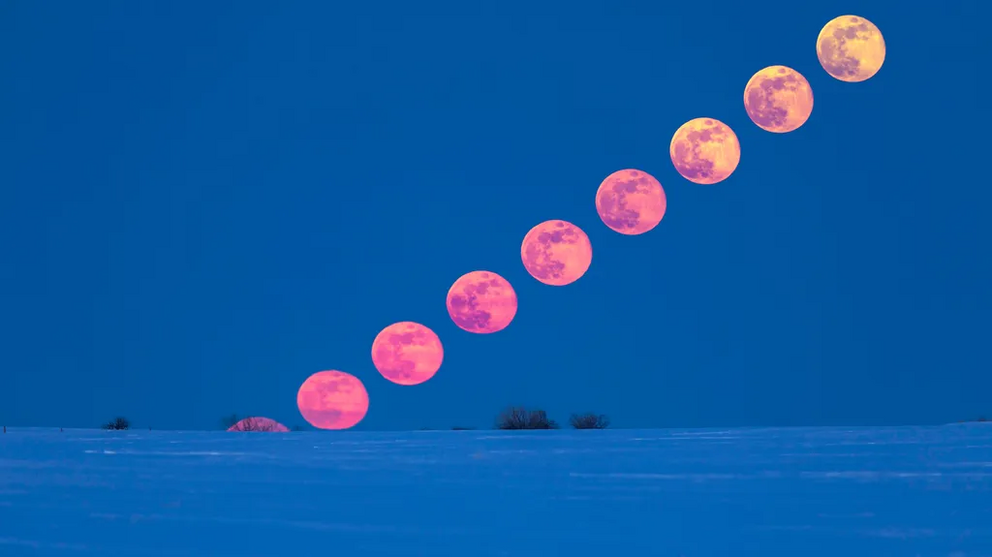
Just like the last two full moons (May's Flower Moon and Blue Moon), June's full moon is a micromoon, meaning it occurs when the moon is near apogee — its farthest point from Earth in its slightly elliptical orbit. As a result, the Strawberry Moon will look around 7% smaller in the sky than an average full moon. It's also the lowest full moon of the year, staying closer to the horizon than most due to Earth's tilt this time of year, just after the summer solstice.
Here's how to photograph the moon when it's at its best.
Full moons of 2026: An overview
In 2026, you'll have the chance to see 13 full moons, including three supermoons and two lunar eclipses (one of which is the last total lunar eclipse until New Year's Eve 2028). Although experienced moon gazers know that the night of the full moon is not the best for observing the lunar surface (even with a good pair of binoculars), the full moon rising as an orb at dusk is a celestial view that's hard to beat.
Full moon guide: When are the full moons of 2026?
Here are all of the full moon dates and times for 2026, according to timeanddate.com, including the most commonly used names in North America:
- Saturday, Jan. 3: Wolf Moon (10:02 UTC/5:02 a.m. EST) — also a supermoon
- Sunday, Feb. 1: Snow Moon (22:09 UTC/5:09 p.m. EST)
- Tuesday, March 3: Worm Moon (11:37 UTC/6:37 a.m. EST) — also a total lunar eclipse
- Wednesday, April 1: Pink Moon (02:11 UTC on April 2/10:11 p.m. EDT on April 1)
- Friday, May 1: Flower Moon (17:23 UTC/1:23 p.m. EDT)
- Sunday, May 31: Blue Moon (08:45 UTC/4:45 a.m. EDT)
- Monday, June 29: Strawberry Moon (23:56 UTC/7:56 p.m. EDT) — also a micromoon
- Wednesday, July 29: Buck Moon (14:35 UTC/10:35 a.m. EDT)
- Friday, Aug. 28: Sturgeon Moon (04:18 UTC/12:18 a.m. EDT) — also a partial lunar eclipse
- Saturday, Sept. 26: Harvest Moon (16:49 UTC/12:49 p.m. EDT)
- Monday, Oct. 26: Hunter's Moon (04:11 UTC/12:11 a.m. EDT)
- Tuesday, Nov. 24: Beaver Moon (14:53 UTC/9:53 a.m. EST) — also a supermoon
- Wednesday, Dec. 23: Cold Moon (01:28 UTC on Dec. 24/8:28 p.m. EST on Dec. 23) — also a supermoon
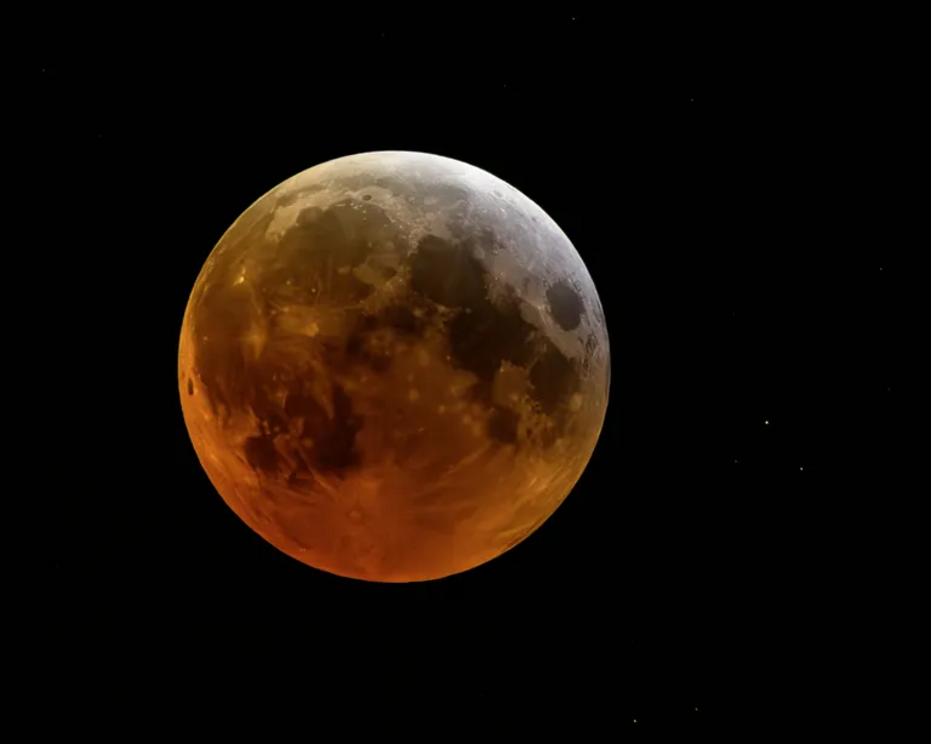 See a total lunar eclipse on March 3, 2026.
Lunar eclipses 2026
There will be two lunar eclipses in 2026, but only one will be total. The first, on March 2-3, will be a total lunar eclipse, during which the full Worm Moon will drift through Earth's inner umbral shadow and turn a reddish-orange color for 58 minutes, from 6:04 to 7:02 a.m. EDT on March 3, according to timeanddate.com. The best views of this event, nicknamed a "blood moon," will be from western North America and the Asia Pacific.
The second lunar eclipse, on Aug. 27-28, will be a partial lunar eclipse, during which 96% of the Sturgeon Moon will enter Earth's inner umbral shadow and may take on a reddish-orange hue near maximum eclipse at 12:12 a.m. EDT on Aug. 28, according to timeanddate.com. The best views will be from North and South America, Europe and Africa.
What are the moon's phases?
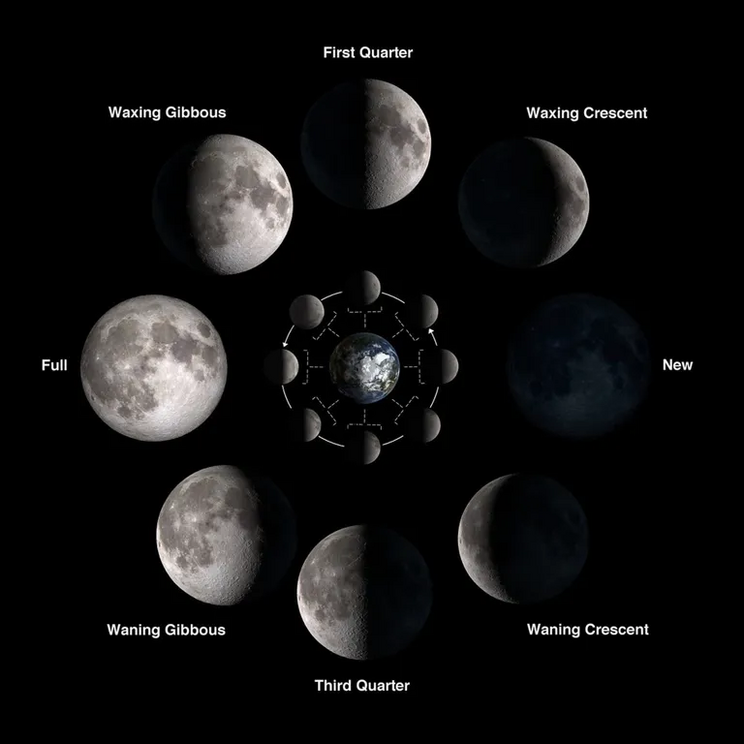 This NASA diagram shows the eight lunar phases.
Scientists typically break the moon's 29.5-day cycle into eight phases, which are determined by the relative positions of the moon, Earth and the sun.
The start of the cycle is the new moon, which is when the moon is exactly between Earth and the sun. We cannot see the moon when it's in the new phase because no sunlight is reflected from its Earth-facing side. A new moon is the only time when a solar eclipse is possible. Two central solar eclipses will occur in 2026: an annular solar eclipse on Feb. 17 and a total solar eclipse on Aug. 12.
As more sunlight hits the moon's Earth-facing side, we say the moon is waxing. The next phase of the moon is called a waxing crescent, followed by the first-quarter phase. Half of the moon's visible surface appears illuminated during the first quarter.
Next comes the waxing gibbous moon, which is partway between a first-quarter moon and a full moon. Halfway through the lunar cycle, the full moon rises, and the moon shines bright and large in the sky. During this phase, the moon and the sun are on opposite sides of Earth, and the entire Earth-facing side of the moon is illuminated.
After the full moon, the waning cycle begins — first with the waning gibbous phase, then a last-quarter moon and, finally, a waning crescent. After almost 30 days, the moon becomes "new" again, and the cycle repeats.
Editor's note: This article is updated monthly. It was last updated on June 25, 2026.