
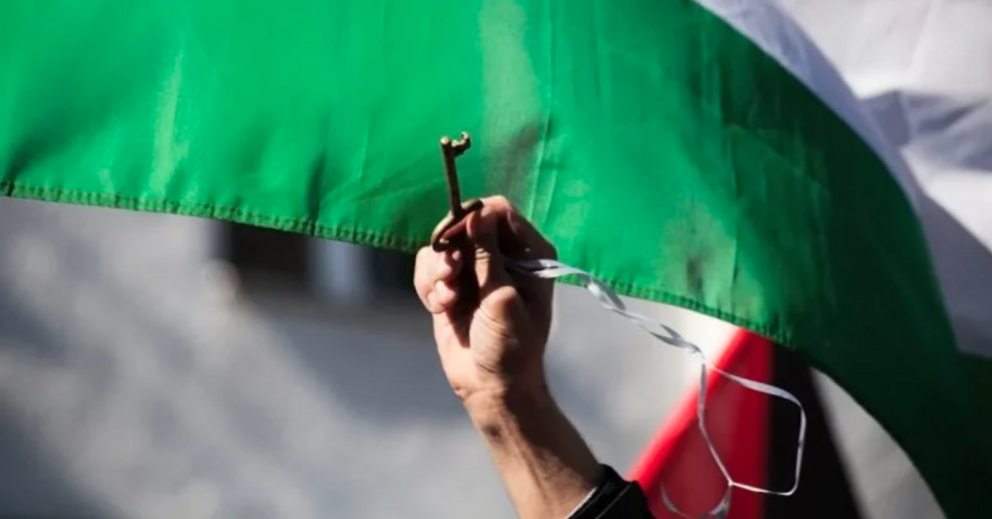
Gaza Hashem: A Tale Told by the Children
An Original English Literary Edition
Global Research, July 20, 2026
To read this article in the following languages, click the Translate Website button below the author’s name.
عربي, Hebrew, Farsi, Español, 中文, Dutch, Русский, Portugues, Français, Deutsch, Italiano, 日本語, 한국어, Српски, Türkçe. And 40 more languages.
.
Gaza Hashem: A Tale Told by the Children
An Original English Literary Edition
By Laala Bechetoula
For the children who could not keep what they loved — and entrusted it to us.
“A tale does not have to show everything. It only has to forget nothing.”
A Note to the Reader
This is a book for adults carried by the voices of children. The children of Gaza are its moral narrators. They speak of what they loved, what they lost, and what they tried to save. Their language is deliberately simple, because childhood does not diminish truth; it often reveals it more clearly. The narrative combines documented history with literary reconstruction. Hind Rajab was a real child, and the circumstances surrounding her final calls for help are part of the public record. Other named children and family figures in the tale—including Nour, Iman, Tariq, Ibrahim, Sitti, Ahmad, and Um Khaled—are literary characters or composite figures unless an endnote expressly identifies a documented individual. They were created from recurring experiences, testimonies, images, objects, and conditions reported in Gaza.
The teacher, the reporter, and the surgeon are likewise composite figures. They represent documented forms of civilian courage: continuing to teach after the destruction of educational institutions, reporting amid bereavement and danger, and treating the wounded under extreme shortages of electricity, fuel, medicines, equipment, and safe hospital space. No invented dialogue should be read as a verbatim historical quotation unless an endnote states otherwise. Two principles govern these pages.
The story belongs to literature. It is the place where memory breathes, where silence is given shape, and where hope survives without denying grief. The endnotes belong to history. They distinguish documented events from literary reconstruction, identify the status of testimony, acknowledge uncertainty where it exists, and record material denials or competing accounts when they form part of the public record. The purpose is neither to soften reality nor to magnify it.
It is to allow literature and historical integrity to walk together. Whenever a child’s voice suddenly falls silent, the silence is not offered as spectacle. It marks the limit beyond which the tale refuses to invent. The empty place remains where it belongs.
Opening
The Threshold Voice
Listen.
On the edge of a blue sea stood a city that carried the name of a man who died 15 centuries ago. Most people called it simply Gaza. We, its children, spoke its older name—Gaza Hashem—because beneath our streets, beneath our schools, beneath the market where fishermen once shouted before dawn, rested an ancestor whose descendant would one day alter the course of history.
The city was old.
Older than memory.
So old that it had survived more empires than the desert sky can count in stars. Beneath the city that stood yesterday lay another city. And beneath that one, another still.
Layer upon layer, like the unread pages of a book that history has never managed to finish.
Canaanites walked here.
Greek soldiers marched here.
Merchants carrying incense, silk, and spices crossed these roads. Kings believed they had conquered the city.
Time conquered them instead.
The city remained.
Then we came.
We lived in the latest layer.
We had homes.
We had classrooms.
We had arguments, birthdays, bicycles, songs, favourite colours, unfinished homework, and plans that stretched farther than the sea.
Above all—
we had names.
Remember that before you remember anything else.
We had names.
Nour, who loved blue because it belonged equally to the sea and the morning sky. Iman, who wrote by candlelight while her grandmother rebuilt a vanished home from memory alone. Tariq, who carried an entire university inside a memory stick after the classrooms had disappeared.
Ibrahim, who counted everything because numbers helped him keep fear from entering his thoughts. And there were thousands more. Far more than one book could ever contain.
One little girl was named Hind. She was five years old. For hours she spoke through a telephone, asking only one thing.
“Come and get me.”
Then, at a certain moment, her voice stopped. She will not tell her own story. We carry her silence instead.
Like an old key hanging over the heart. Others had already taught us what to do when death comes before the story is finished. They told us that if they were taken, someone must continue speaking—not to replace them, because no one can—but to keep memory from becoming another ruin.
So we made a tale. Not because tales are less true than history. Because sometimes they allow truth to remain human.
It will not always be beautiful.
Truth rarely is.
But every word you are about to hear begins where a child might simply look at you and say:
“I was here.”
As for me—
I have no name yet.
Not tonight.
My task is to gather the voices before they disappear, to carry them from one child to another before darkness swallows them whole. I am the child who gathers. My grandmother—everyone called her Sitti—would light a single candle whenever the electricity failed.
It failed often.
She would smile, shielding the little flame with both hands, and whisper,
“Don’t be afraid. This city has lived through longer nights. Morning has always found its way back.”
So come closer.
Sit beside the candle.
Listen first to Nour.
She loved the colour blue.
Movement I
Blue, Earth, and Wood
Where the child who gathers descends toward the grave and discovers that building is also a form of memory.
Nour, Who Loved Blue
My name is Nour.
Here, I am allowed to speak. That is the first kindness this story offers me. In the world outside these pages, there came a day when I could no longer finish my sentence.
Here, I can.
I loved the colour blue. Not because someone told me it was beautiful, but because it belonged to two things I trusted: the sea beyond the rooftops and the morning sky before the birds crossed it. I loved watermelon in summer.
I loved my cousin Lama because she could outrun everyone in the neighbourhood and never laughed at those who could not keep up. I loved my teacher, Mrs. Hana. Whenever she marked our notebooks, she drew a tiny golden star beside the neatest handwriting.
Most days, the star found its way to my page. I wanted to become a doctor. Not because doctors wore white coats.
Not because people stood when they entered a room. I wanted to become a doctor because I could never understand why pain should be left alone when someone might still do something about it. There came a night when there was nothing left for anyone to do.
That is all I will say. A tale does not have to show everything. It only has to forget nothing.
My father was named Ahmad.
He worked with wood.
People said no one in our district understood walnut and olive wood the way he did. He would run his fingertips over a plank before cutting it, as though the grain were already telling him what it wished to become. Long after almost everything else had disappeared, someone found him building a bookcase.
Not from new timber.
From beams rescued out of broken houses. He no longer owned many books.
That did not matter.
He said that shaping beauty from shattered wood reminded his hands that destruction was never the only craft left to human beings. As he sanded one of the shelves, he smiled quietly.
“Nour would have liked this piece,” he said.
“She always noticed the grain.”
He was right.
I always did.
Sometimes love is remembered through the smallest details. Not the day someone was born. Not the day they died.
But the way they paused to admire the lines hidden inside a piece of wood.
The Descent
Now it is my turn again. I am the child who gathers. I folded Nour’s blue carefully inside my memory, the way children once folded marbles into their pockets before running home at sunset.
Then I walked south.
People had whispered that, beyond the ruined streets, men were digging.
Not for treasure.
For names.
Sitti watched me leave.
“There are nights,” she said, “when a storyteller must walk where no child should ever have to walk. Otherwise he tells fairy tales instead of truth.”
So I went.
The earth was quiet.
Not because it had nothing left to say. Because grief rarely raises its voice.
Men worked slowly.
Every handful of soil was lifted with the care usually reserved for sleeping infants.
No one hurried.
When the dead have waited this long, another minute no longer matters. What mattered was giving each person back the dignity of being found. I will not tell you everything they found.
Some things belong first to those who buried their loved ones.
Some belong to judges.
Some belong to history.
A tale should never claim certainty where certainty does not yet exist. But I remember two colours.
Red.
Green.
They remained with me long after every other detail had begun to fade. No one could tell me the children’s names. Perhaps someone still knows them.
Perhaps no one does.
Until their names return, I will keep their colours. As long as I remember those two colours, I know that somewhere two children once laughed, argued, grew impatient, dreamed of tomorrow, and expected morning to arrive like every other morning before it.
The Ascent
When I climbed back toward daylight, I believed I had become heavier. Sitti noticed before I spoke.
“You carried something back.”
I nodded.
“I don’t know how to carry it.”
She looked toward Ahmad’s workshop. He had already returned to the rescued timber. His plane moved across the wood with the same patience as before.
Not because nothing had happened.
Because everything had happened.
There are machines that push earth over graves. There are hands that shape broken beams into shelves for books that have not yet been written. Both exist in the same world.
Only one of them prepares tomorrow. That morning I understood something I had not known the night before. Building is not the opposite of mourning.
Sometimes it is mourning’s most faithful companion.
A wall rebuilt.
A school reopened.
A tree planted.
A book placed upon a shelf fashioned from ruined wood. None of these erase loss. They simply refuse to let loss become the final architect.
Sitti placed her hand upon my shoulder.
“Come,” she said.
“There is an old woman waiting for us.”
“What does she keep?”
“A key.”
“Does it still open her house?”
“No.”
“Then why keep it?”
Sitti smiled.
“You are asking the wrong question.”
She took my hand.
“The key no longer opens the door.”
“It opens the memory.”
And together we walked toward Um Khaled, who had carried that memory around her neck for more than half a century.
Movement II
The Key, the Fig Tree, and the Sea
Where memory proves that a home can survive even after its walls have vanished.
Iman, Who Wrote by Candlelight
My name is Iman.
I still have my hands. I still know how to write. During those months, that already felt like a kind of fortune.
When darkness came, my grandmother would light a single candle and place it between us. The flame was small enough for us to see each other’s faces without seeing much of the room around us.
“It is better this way,” she would say.
“Memory likes a quiet light.”
Everyone called her Um Khaled. She had spent almost her entire life in a refugee camp. Yet she spoke every evening about another place, another street, another courtyard, another sky.
She described it so patiently that, as a child, I thought she must visit it while the rest of us slept. Only later did I understand.
She had never returned.
The place she described existed now only inside those who remembered it. Around her neck hung an old iron key. It was larger than any key I had ever seen.
The metal had darkened with time. Its teeth were worn smooth by the touch of generations. It opened no door that still stood.
Yet my grandmother never removed it.
Not while she slept.
Not while she cooked.
Not even while washing.
One evening I asked,
“Does it still work?”
She looked at me for a long moment before answering.
“It no longer opens a house.”
She rested her hand over the key.
“It opens me.”
The House She Never Forgot
That night she unfolded memory the way other people unfold maps. She did not begin with walls.
She began with light.
“The morning entered from the eastern window,” she said.
“It reached the kitchen first.”
Then she spoke of the courtyard where children played before breakfast. She remembered the sound of water drawn from a stone well. She remembered the smell of bread cooling on woven baskets.
She remembered neighbours who no longer had graves anyone could point to. She remembered the fig tree. Not simply that there had been one.
She remembered the way its branches leaned toward the wall. She remembered which month its fruit ripened. She remembered how its leaves sounded when the afternoon wind crossed them.
Memory, I discovered, is not made of monuments. It is made of ordinary afternoons that refuse to disappear.
“Write,” she whispered.
So I wrote.
Not because ink could preserve a house. But because forgetting certainly could not. When she had finished, she folded the pages carefully.
She placed the old key upon them. Then she looked at me.
“One day,” she said, “someone will ask whether this house ever existed.”
“What shall I tell them?”
She smiled.
“Tell them I remembered where the sunlight entered.”
Three Things That Cannot Be Confiscated
When the candle burned low, Sitti joined us. She lifted the key gently. Then she looked toward the darkness beyond the doorway, where the sea lay somewhere beyond the night.
“Do you see?” she asked.
I shook my head.
“There are three things no army has ever learned how to confiscate.”
She held up the key.
“This remembers a home.”
She pointed toward the invisible countryside where the fig tree had once grown.
“This remembers roots.”
Finally she turned toward the sea, hidden but unmistakably present beyond the silence.
“And that remembers distance.”
I did not understand.
Not yet.
Years later I would.
A key does not merely keep a door.
It keeps belonging.
A tree does not merely bear fruit. It teaches that life begins again beneath the surface, long before anyone sees a leaf.
And the sea—
the sea refuses every wall built to imprison the horizon. That night I realized something children often discover before adults do. Home is larger than a building.
It survives in language.
In recipes.
In songs.
In names.
In the direction sunlight enters a room. It survives because someone continues telling the story.
The Child Who Gathers
I carried three gifts away from Um Khaled’s candle.
Not the key itself.
That belonged to her.
Not the fig tree.
That belonged to memory.
Not the sea.
No one owns the sea. I carried only what each of them meant. The key taught me that belonging can outlive stone.
The fig tree taught me that roots continue their work in darkness. The sea taught me that every horizon is also a promise. Sitti noticed I had become quieter.
“What are you thinking?”
“I was wondering how a city survives.”
She answered without hesitation.
“Not by protecting every wall.”
“Then how?”
“By making sure someone remembers where the door once stood.”
She extinguished the candle.
For a moment, the room disappeared.
Only her voice remained.
“Come,” she said.
“There is another child waiting.”
“He carries no iron key.”
“What does he carry?”
“A small piece of plastic.”
I frowned.
“A toy?”
“No.”
“A library.”
Outside, dawn had not yet arrived. But somewhere beneath canvas stretched across broken poles, a young man was already preparing for the morning by studying the science of rebuilding the world.
Movement III
Saving the Morning
Where a young man discovers that knowledge, too, can become a shelter.
Tariq, Eighteen
My name is Tariq.
I am 18 years old. People often tell stories about survival as though it were one great act of courage.
It is not.
Most days, it is a hundred small decisions made before breakfast.
Get up.
Find water.
Help someone carry a blanket.
Read one more page.
Begin again tomorrow.
Before the war, I was studying engineering. I liked bridges more than buildings. A building serves those inside it.
A bridge serves strangers who may never know who designed it. I thought that was a beautiful profession.
Then the classrooms disappeared.
The laboratories disappeared.
The library disappeared.
The timetable, the examinations, the ordinary future I had imagined—all of it vanished with astonishing speed.
But one thing remained.
Months earlier, without giving it much thought, I had copied thousands of pages onto a small memory stick.
Textbooks.
Lecture notes.
Structural analysis.
Mathematics.
Materials science.
Hydraulics.
Everything I feared I might someday need. When the internet fell silent, that little piece of plastic became my university. Each morning I opened the files beneath a tent that offered more determination than shelter.
When daylight faded, I closed my eyes and repeated what I had learned until the words belonged to memory rather than to a screen. People sometimes asked why I continued.
“Who knows,” they would say, “whether there will be universities again?”
I never answered immediately.
Finally I would smile.
“There will be.”
“How can you be certain?”
“Because someone will have to rebuild them.”
Lessons Without Walls
There is a strange freedom in studying when nothing around you resembles a classroom. No bell tells you when to begin. No professor reminds you to pay attention.
The only teacher left is the future.
Every formula carried weight.
Every diagram felt like a promise postponed rather than cancelled. I learned how concrete carries compression.
How steel carries tension.
How foundations spread weight into the earth instead of surrendering to it. Sometimes I would stop reading and look around. Children were chasing one another between tents.
Someone was baking flatbread over a small fire. An old man repaired a broken chair that had already been repaired many times before. Without realizing it, everyone around me was teaching the same lesson my textbooks were trying to explain.
Things endure because someone refuses to abandon them. Engineering is not only mathematics. It is hope measured carefully enough to stand.
Two Keys
One evening Sitti sat beside me. She picked up the memory stick and turned it slowly between her fingers.
“It is very small,” she said.
“It carries many books.”
She nodded thoughtfully.
“Then it is not so different from Um Khaled’s key.”
I laughed.
“One is iron.”
“The other is plastic.”
“One opens nothing.”
“The other plugs into a computer.”
Sitti smiled.
“You are looking at what they are made of.”
“What should I be looking at?”
“What they protect.”
I suddenly understood.
Um Khaled’s key guarded yesterday.
Mine guarded tomorrow.
One preserved the memory of a house. The other preserved the knowledge required to build another.
Neither had surrendered.
Each was waiting.
The Child Who Gathers
When I met Tariq, I expected to find someone studying. Instead I found someone already rebuilding.
Not with bricks.
With memory.
Every page he learned became a stone no bomb could break. Every theorem became another beam laid quietly across the future. I remembered what Sitti had told me long ago.
Cities are not kept alive by their walls. They are kept alive by those who know how to raise walls again. That night I carried away no object.
No key.
No notebook.
No photograph.
I carried only a sentence. A city is not made of stone. A city is made of people who still know how to build with stone after the dust has settled.
Toward the Next Voice
Before dawn, Tariq closed his computer. The battery had almost disappeared. He slipped the memory stick into his pocket as carefully as another person might return a family heirloom to its box.
Outside, the eastern sky had begun to pale. The first birds were singing. They did not know whether the day would be gentle.
Birds never do.
They sing because morning has arrived. As we walked away, Sitti said quietly,
“Knowledge is one way of rebuilding.”
She paused.
“But it is not the first.”
“What comes before it?”
She looked toward a small boy waiting beside a line of water containers.
“He remembers everyone’s name.”
“Go and meet Ibrahim.”
“He will teach you why names must always come before numbers.”
Movement IV
The Son of the Rubble
Where a child discovers that numbers may count the dead, but only names keep the living human.
Ibrahim, Eleven
My name is Ibrahim.
I am 11 years old. People think I like numbers.
That is not true.
I count because counting gives my hands something to do while my heart catches its breath. I count the steps to the water point. Three hundred and forty-two today.
Yesterday it was fewer.
Tomorrow it may be more. I count the empty containers before I carry them. I count the pieces of bread before we divide them.
I count the blankets after nightfall to make sure no one has been forgotten. Adults imagine children dream of impossible things.
A bicycle.
A football.
A trip to the sea.
Sometimes we do.
But there are seasons when a child dreams only that everyone who fell asleep beside him will still be there at dawn. That is not a dream any child should have to carry. Yet many of us did.
One
I had a little sister. When she laughed, she covered her mouth with both hands, as though laughter were something precious that might fly away if she did not hold it close. Now I have another little sister.
Every night, before I close my eyes, I look toward her.
Once.
Twice.
Three times.
She sighs in her sleep. She turns over beneath the blanket. Only then do I allow myself to rest.
Every morning I wake before she does. I whisper the same word.
“One.”
As long as I can say one, I know she is still here. People ask why I count.
This is why.
Not every number makes us disappear. Some numbers help us remain.
What Cannot Be Added
One afternoon Tariq found me drawing figures in the dust with a stick.
He watched quietly.
“What are you calculating?”
“The shortest way to the water.”
He smiled.
“You’re thinking like an engineer.”
“I’ve never met one.”
“You just have.”
He knelt beside me and changed one of my lines.
“The ground is softer here,” he said.
“If you carry heavy containers every day, this path will wear you out sooner.”
I looked at him.
“You can learn that from books?”
“You can.”
“And from people?”
He nodded.
“The best engineers learn from both.”
We sat together for a while without speaking.
Finally I asked,
“When everything is counted on television… why do they never say the names?”
Tariq looked toward the horizon before answering.
“Because numbers travel faster.”
“And names?”
“They travel farther.”
I never forgot that.
The Weight of a Name
Later that evening I asked Sitti whether numbers frightened her.
“No,” she said.
“Numbers are honest.”
“Then why do people become sad when they hear them?”
“Because numbers are too small for grief.”
She picked up a pebble from the ground.
“If I tell you there is one stone in my hand, you know something.”
She opened her fingers.
“If I tell you this stone belonged to the wall where your grandfather leaned every evening to watch the sunset…”
She smiled.
“Now you know much more.”
That was when I understood. A statistic tells us how many. A name reminds us who.
One is necessary.
The other is sacred.
The Child Who Gathers
I carried Ibrahim’s lesson with greater care than anything I had gathered before. Nour had entrusted me with the colour blue. Um Khaled had entrusted me with a key.
Tariq had entrusted me with tomorrow. Ibrahim entrusted me with names. Only then did I understand why Sitti had always begun every story the same way.
Never with the battle.
Never with the ruin.
Never with the date.
Always with the name.
Because once you know someone’s name, it becomes much harder to look away.
Toward Those Who Remained Standing
That evening the wind rose from the sea.
Canvas walls trembled softly.
Somewhere nearby a teacher was still teaching. A reporter was still speaking. A doctor was still working beneath a failing light.
Children often believe that courage belongs to heroes.
Sitti shook her head.
“No,” she said.
“Courage usually belongs to people who simply keep doing the next necessary thing.”
“Who are they?”
“Come.”
She took my hand.
“I want you to meet three grown-ups.”
“They will show you something every child deserves to know.”
“What is that?”
“That even when the world grows dark, there are still people who choose to carry the light for others.”
And together we walked toward the voices that refused to fall silent.
Movement V
Those Who Carried the Light
Where the child who gathers learns that witness, teaching, and healing are different ways of refusing silence.
There are stories children cannot tell alone. Not because we lack the words. Because some roads must first be walked by those who are older.
Before I could carry other people’s voices, I had to meet three adults who showed me what it means to remain human when the world is trying to teach the opposite. They did not know one another in the way neighbours do. Yet they belonged to the same family.
The family of those who refuse to look away.
The Teacher
The first was a teacher. His classroom had windows that looked toward the sea. He loved books the way gardeners love rain.
He believed every language opened another window, and every story rescued one more life from becoming invisible. Many of his students had never crossed a border. Yet through his lessons they travelled farther than maps.
He would tell them,
“Never allow anyone to reduce you to a headline.”
Then he would hand them a blank page.
“Write.”
Not because writing changes yesterday. Because it changes what tomorrow is allowed to forget. When violence entered his own life, it did not erase the lesson.
His students continued writing.
Long after their voices are gone, their sentences keep finding new mouths.
Sitti once whispered,
“A good teacher never fills a room.
He fills the future.”
The Reporter
The second was a reporter. Every day he stood where other people were running away.
He carried no weapon.
Only a microphone and a camera. People often imagine that courage is loud.
It is not.
Sometimes courage sounds exactly like an ordinary voice describing extraordinary suffering without allowing anger to replace accuracy. One day, while he was doing his work, devastating news reached him. His own family had become part of the story he was trying to explain to the world.
For a few moments he closed his eyes.
Then he finished speaking.
Only afterward did he go to them. For a long time I wondered how that was possible.
I finally asked Sitti.
“Didn’t his heart break?”
She answered gently,
“Of course it did.”
“Then why didn’t he stop?”
“Because some people discover that the only way to honour those they love is to make certain the world cannot say it never knew.”
That night I understood that witness is not the opposite of grief. Sometimes it is grief that has found its voice.
The Surgeon
The third was a surgeon. I never learned whether his hands were naturally steady. Perhaps they trembled every morning before work.
Perhaps they still do.
But whenever someone needed him, his hands remembered what fear forgot. The hospital where he worked had become smaller than the suffering it received.
Electricity came and went.
Medicines became precious.
Machines fell silent.
Yet operations continued.
Sometimes another person stood beside him holding a telephone above the operating table because the small light from its screen was all that remained. A child once asked him,
“Weren’t you afraid?”
He smiled before answering.
“I was.”
“So why didn’t you leave?”
“Because the wounded could not.”
Children understand answers like that.
Three Lessons
When we walked home, I asked Sitti why she had brought me to those three people. She counted softly on her fingers.
“The teacher reminds us that memory must be passed on.”
“The reporter reminds us that truth must be spoken.”
“The surgeon reminds us that life must be protected.”
She closed her hand.
“And together?”
“They remind us,” she said, “that hope is not a feeling.”
“What is it?”
“A responsibility.”
We continued walking.
The sea lay somewhere beyond the darkness. Behind us, a candle still burned in Um Khaled’s room. Ahead of us, Ibrahim would be counting before he fell asleep.
Tariq would be reading one more page before dawn. Nour’s father would still be smoothing rescued wood with patient hands. One by one, the stories I had gathered began to fit together.
Not like pieces of broken glass. Like stones laid carefully into an arch. Each one leaned upon another.
Each one made the next possible.
Toward Morning
Before we reached home, Sitti stopped beneath the open sky.
“Do you hear it?” she asked.
I listened.
Only the wind.
“No,” she said with a smile.
“Listen more carefully.”
Then I heard them.
Children breathing in their sleep.
Some restless.
Some peaceful.
All still dreaming.
“As long as children are still capable of dreaming,” Sitti whispered, “morning has not surrendered.”
She took my hand.
“Come.”
“There is only one story left to tell.”
“The story that belongs to everyone.”
“The story of morning.”
Closing
Morning Always Returns
The candle had almost burned itself away. Its flame was no taller than a child’s thumb. Around us, the room had become little more than shadows and quiet breathing.
Sitti looked at me.
“It is time.”
“For what?”
“To give back everything you have gathered.”
I looked down at my empty hands.
“I have nothing.”
She smiled.
“Look again.”
So I did.
Nour had entrusted me with blue. Not simply the colour of the sea, but the certainty that beauty remains worth noticing even when the world seems determined to erase it. Ahmad had entrusted me with wood rescued from broken houses, teaching me that creation is sometimes the most faithful companion of grief.
Um Khaled had entrusted me with a key that no longer opened a door, yet still opened an entire homeland inside memory. The fig tree had entrusted me with its roots, reminding me that the deepest work of life happens where no eye can see. The sea had entrusted me with the horizon, refusing every attempt to imprison hope.
Tariq had entrusted me with tomorrow, folded into a memory stick small enough to disappear inside a pocket and large enough to preserve a future. Ibrahim had entrusted me with names, because numbers may describe loss, but names restore faces. The teacher had entrusted me with stories.
The reporter had entrusted me with truth. The surgeon had entrusted me with hands that continue working even when the heart is breaking. I thought I had been collecting memories.
Only then did I understand. I had been collecting responsibilities.
Outside, dawn was beginning its patient work. The darkness did not disappear all at once. It surrendered little by little.
First the outline of a wall. Then the branches of a tree.
Then the roofs.
Then the faces.
Morning has always been like that. It never argues with the night.
It simply continues arriving.
Sitti stood beside the window.
“When I was a little girl,” she said, “I believed morning came because the sun was faithful.”
She paused.
“Now I think it comes because people are.”
I asked her what she meant.
She turned toward me.
“The sun rises whether we deserve it or not.”
“But morning…”
She looked around the room where so many voices had found refuge.
“…morning exists because someone decides to carry another person’s hope until they can carry it themselves.”
I remembered Hind.
The little girl whose voice travelled through a telephone until silence answered in its place. She had asked only one thing.
“Come and get me.”
No one reached her in time. That truth cannot be changed.
But another truth remains.
Her voice did not disappear. It crossed into the memory of everyone who heard it. That is what stories do.
They refuse the final victory of silence.
There was one thing I had not yet told you. All night you have known me only as the child who gathers. I said I had no name.
That was not entirely true. Sitti had given me one long ago. She chose the oldest name the city still carries.
The name of the traveller who came here centuries before any of us, whose memory became part of the city’s own.
“My name,” I said quietly, “is Hashim.”
The old man rests beneath the city. The child walks above it. Between them stretches 15 centuries of memory.
Neither has been forgotten.
Now the candle has reached its end. Its light is no longer needed. Not because darkness has vanished.
Because you know your way through it. You know what must be carried.
A key.
A name.
A page.
A piece of wood.
A memory.
A promise.
Take them.
They no longer belong only to us. They belong to you now.
Guard them carefully.
Not because they are fragile.
Because they are human.
And human things survive only when another human being agrees to remember them. If, one day, someone asks you what Gaza was, do not begin with ruins.
Begin with the children.
Tell them about the girl who loved blue. Tell them about the grandmother who remembered where the morning entered her house. Tell them about the student who carried a university in his pocket.
Tell them about the little boy who counted names before numbers. Tell them about those who taught, those who witnessed, and those who healed.
Then tell them this:
Cities are not kept alive by stone alone. They endure because generation after generation chooses to remember what hatred tries to erase. That is why Gaza has survived kingdoms, empires, sieges, occupations, and wars.
Not because suffering made it immortal. But because love refused to become extinct.
Listen.
The birds have begun.
The sea is awake.
Someone is opening a window.
Someone is kneading bread.
Someone is teaching a child to read. Someone is planting a tree. Someone is writing a name.
Morning has returned.
Not because the night was short. But because no night, however long, has ever persuaded the human heart to abandon the dawn. and that, perhaps, is the oldest story Gaza Hashem has ever told.
Endnotes and Documentary Sources
Editorial Method
The tale combines documented events, historical traditions, composite characters, and invented dialogue. A documented individual is a person whose identity and relevant experience appear in publicly accessible records. A composite figure is a literary character created from multiple reported experiences rather than from the biography of one identifiable person. A literary reconstruction gives narrative form to an event, atmosphere, object, gesture, or conversation without claiming to reproduce a verbatim historical record.
Unless otherwise stated, dialogue in the tale is invented. Its purpose is literary and ethical, not evidentiary.
1. Gaza and the Name “Gaza Hashem”
Gaza is one of the oldest continuously inhabited urban centres of the eastern Mediterranean. Its history includes Canaanite, Philistine, Egyptian, Assyrian, Babylonian, Persian, Hellenistic, Roman, Byzantine, Islamic, Crusader, Mamluk, Ottoman, British Mandate, Egyptian, and modern Palestinian periods. The Arabic name Ghazza Hāshim, rendered in this book as Gaza Hashem, is associated with the tradition that Hāshim ibn ʿAbd Manāf died in Gaza during a trading journey and was buried there. Hāshim was the great-grandfather of the Prophet Muhammad. The Mosque of Sayyid Hāshim in Gaza City is traditionally identified with his burial place. The tale treats this tradition as part of the city’s inherited cultural memory. It does not claim that the identification of the grave has been established through modern archaeological investigation.
2. The Ancient Layers of Gaza
The description of cities lying beneath cities is a poetic rendering of Gaza’s exceptionally long and repeatedly rebuilt urban history. “Layer upon layer” should not be read as a claim that a specified number of complete cities has been scientifically established beneath every part of present-day Gaza. Archaeological terminology more commonly refers to successive occupation levels, phases, or strata. The references to Canaanites, Greek forces, merchants, kingdoms, and empires reflect Gaza’s historical position on major routes connecting Egypt, the Levant, Arabia, and the Mediterranean.
3. The Children Named Nour, Iman, Tariq, and Ibrahim
Nour, Iman, Tariq, and Ibrahim are literary or composite characters. Their individual biographies, family relationships, dialogue, ambitions, possessions, and gestures are not presented as the verified life histories of four specifically identifiable children. They draw upon recurring and extensively documented experiences among Palestinian children and young people in Gaza, including:
- bereavement and displacement;
- interrupted education;
- loss of homes and possessions;
- dependence on candles, batteries, or improvised sources of light;
- repeated journeys to obtain water;
- fear for sleeping relatives;
- attempts to preserve school materials and continue studying;
- the use of memory, names, objects, and family stories as forms of continuity.
The names were selected for literary purposes. Any resemblance to the biography of a particular person bearing the same name is unintended unless another note expressly states otherwise.
4. Nour, Ahmad, and the Rescued Wood
Nour and her father Ahmad are literary characters. The blue colour, the watermelon, the teacher’s gold star, Nour’s wish to become a doctor, her cousin Lama, the work with walnut and olive wood, and the construction of a bookcase from salvaged beams are literary details. The episode represents a broader documented practice found in societies affected by destruction: salvaging doors, beams, metal, stone, furniture, books, and domestic objects from damaged buildings for reuse. The bookcase is therefore symbolic rather than a claim concerning one documented carpenter.
5. “The Descent”: Graves, Earth, Red, and Green
The excavation scene is a literary reconstruction. The text deliberately does not specify a location, date, military unit, number of bodies, cause of death, or legal conclusion. The two colours—red and green—are literary memory-signs and should not be interpreted as forensic descriptions of clothing recovered in a particular documented excavation. The passage’s statement that some matters belong “to judges” and “to history” marks the boundary between literary witness and legal proof. No allegation concerning a particular grave site should be inferred from this scene without a separate, independently sourced identification.
6. Um Khaled, the Key, and the Lost House
Um Khaled and Iman are composite literary figures. The large iron key represents a widely documented Palestinian symbol of displacement and the continuing memory of homes lost during the Nakba of 1948 and subsequent episodes of forced displacement. The eastern window, the courtyard, the well, the bread, the fig tree, and the direction of the morning light are invented details. They illustrate the precision with which displaced families may transmit domestic and geographical memory across generations. The statement that the key “opens memory” is metaphorical.
7. The Fig Tree
The fig tree functions symbolically as a sign of rootedness, agricultural continuity, seasonal memory, and life persisting beneath visible destruction. It is not attached in the tale to a verified individual tree or property. Fig, olive, citrus, almond, and other trees recur throughout Palestinian family histories, oral testimonies, literature, and visual culture. The tale selects the fig tree for its intimacy: its shade, leaves, fruit, and closeness to domestic courtyards.
8. The Sea
Gaza lies on the Mediterranean coast. The sea is both a physical presence and a literary symbol in the book. Statements such as “the sea refuses every wall built to imprison the horizon” are poetic propositions, not legal or geographical claims. The sea represents distance, continuity, freedom of imagination, livelihood, danger, and a horizon that remains visible even under enclosure.
9. Tariq and the University in a Pocket
Tariq is a composite literary character. His age, engineering studies, preference for bridges, collection of textbooks, and USB memory stick are invented. They represent the efforts of Palestinian students and educators to preserve educational materials and continue learning under displacement, damaged communications, electricity shortages, and the destruction or severe impairment of schools and universities. United Nations experts warned in April 2024 of a pattern of destruction affecting schools, universities, teachers, and students in Gaza. UNESCO later reported extensive damage across the education system, including severe damage or destruction affecting the overwhelming majority of school buildings and higher-education campuses. The sentence “that little piece of plastic became my university” is literary, not a quotation from an identified student.
10. Damage to Education
The scale of destruction has changed over the course of the conflict, and figures depend on the assessment date and methodology. United Nations experts expressed concern in April 2024 over what they described as the possible “scholasticide” of Gaza through the pattern of attacks on schools, universities, educators, and students. UNESCO subsequently reported that almost all school buildings had sustained some level of damage and that a large majority would require full reconstruction or major rehabilitation. UNESCO’s assessment of higher education found that most campuses had been damaged and that many were completely destroyed or rendered non-operational. These figures establish the documentary setting behind Tariq’s chapter. They do not establish that a real student with Tariq’s precise biography existed.
11. Ibrahim and the Act of Counting
Ibrahim is a composite literary character. The 342 steps, the containers, the pieces of bread, the blankets, the first sister, the surviving sister, and the dialogue with Tariq are invented. The chapter gives literary form to the ways children may use repetition, counting, checking, and routine when living with displacement, scarcity, bereavement, and fear. It does not offer a clinical diagnosis of Ibrahim or of children affected by war.
The contrast between numbers and names expresses the book’s ethical argument: statistics are necessary for documenting scale, while names preserve individuality.
12. The Teacher
“The Teacher” is a composite figure. His classroom, windows, love of languages, statements to students, death or disappearance, and the continuation of his work through former pupils are literary constructions. He represents educators who continued teaching during displacement, through informal classes, shelters, remote materials, temporary learning spaces, and other emergency arrangements. The sentence “A good teacher never fills a room. He fills the future” is original to this tale.
13. The Reporter
“The Reporter” is a composite figure and should not be read as the biography of one named journalist. The episode draws upon documented cases in which Palestinian journalists continued reporting while exposed to attacks, displacement, injury, the destruction of media infrastructure, and the deaths of relatives or colleagues. The Committee to Protect Journalists has described the Gaza conflict as the deadliest period for journalists since it began keeping global records. It has documented killings, injuries, arrests, threats, censorship, missing journalists, attacks on media infrastructure, and the killing of journalists’ family members. The scene in which the reporter learns of a family tragedy while working is a literary synthesis. It is not presented as a verbatim reconstruction of one broadcast unless a future edition expressly identifies and sources such an event.
14. The Surgeon
“The Surgeon” is a composite figure. The dialogue with the child and the description of his thoughts and fears are invented. The material conditions surrounding him are based on extensive reporting: overwhelmed hospitals, shortages of fuel and electricity, depleted medicines and anaesthetics, damaged facilities, and operations conducted under improvised lighting. In October 2023, reporting from Gaza documented medical personnel using mobile-phone lights during treatment and surgery as electricity and generator fuel became scarce. Later humanitarian assessments described much of Gaza’s health system as damaged, non-operational, or overwhelmed.
The passage does not identify a particular hospital, operation, surgeon, or patient.
15. Medical Neutrality and Protection
Hospitals, ambulances, medical workers, the wounded, and the sick are protected under international humanitarian law, subject to the applicable legal rules and circumstances. The International Committee of the Red Cross has repeatedly stated that health-care personnel, facilities, and medical transport must be respected and protected and that the disruption of medical care harms entire civilian populations. This note states the governing humanitarian principle. It does not make a legal determination concerning every individual incident alluded to in the literary narrative.
16. Hind Rajab
Hind Rajab was a Palestinian child trapped in a vehicle in the Tel al-Hawa area of Gaza City on 29 January 2024 after members of her family had been killed. She remained in telephone contact with Palestinian Red Crescent Society personnel and pleaded for help. Public reporting commonly identifies her as six years old, although some accounts have described her as five. After an ambulance was dispatched, contact was lost with Hind and with the two paramedics, Yusuf Zeino and Ahmed al-Madhoun. Hind’s body, the bodies of family members, and the bodies of the paramedics were found on 10 February 2024 after Israeli forces withdrew from the area. The wording “Come and get me” in the tale is a concise literary rendering of her pleas. Publicly released recordings include words translated into English as “I’m so scared. Please come.”
The Palestine Red Crescent Society accused Israeli forces of firing on the family vehicle and the ambulance. The Israel Defense Forces initially stated that its troops had not been within firing range of the vehicle. Independent investigations challenged that account. A later United Nations finding attributed the destruction of the vehicle and the killing of the medics to Israeli forces. As of later public reporting, the Israeli military said that the incident remained under review. The tale does not attempt to reproduce the complete call, determine weapon trajectories, or substitute itself for a judicial investigation.
17. Silence and Interrupted Voices
The book sometimes ends a child’s speech through ellipsis, interruption, or silence. Such moments are literary forms of restraint. They should not be interpreted as separate factual claims that each fictional speaker was killed at the precise point where the narration stops. Where the book refers to a documented individual, such as Hind Rajab, the relevant historical circumstances are addressed separately in the endnotes.
18. Hāshim and the Child Who Gathers
The narrator called “the child who gathers” is entirely fictional. His eventual name, Hashim, creates a symbolic relationship between the contemporary child, the inherited name Gaza Hashem, and the city’s historical memory. The narrator is not intended to represent Hāshim ibn ʿAbd Manāf reincarnated, descended into the present, or speaking through a historical consciousness. The lines concerning the old man beneath the city and the child walking above it belong to the poetic architecture of the tale.
19. Chronology
The narrative does not unfold according to a strict calendar. It moves associatively from one symbolic object or responsibility to another:
- blue;
- wood;
- earth;
- the key;
- the fig tree;
- the sea;
- preserved knowledge;
- names;
- teaching;
- witnessing;
- healing;
- morning.
Events described in adjacent chapters should not therefore be assumed to have occurred on consecutive days or in the same neighbourhood.
20. Historical and Legal Caution
Terms such as “war”, “attack”, “destruction”, “displacement”, “occupation”, “siege”, “grave”, and “ruin” may carry legal as well as ordinary meanings. Within the tale, they are primarily used in their ordinary literary sense unless a note expressly refers to a legal finding. The book does not purport to determine individual criminal responsibility. Such determinations require competent courts, admissible evidence, and procedures that literature cannot replace. Nor does the refusal to make a judicial determination imply neutrality towards the suffering of civilians or uncertainty about their humanity.
21. Significant Denials and Disputed Accounts
Where a documented event has generated a material public denial, the endnotes record that denial when it is relevant to the integrity of the account. Including a denial does not establish that the denial is true. Likewise, recording an allegation or investigative finding does not convert the tale itself into a judicial judgment. The purpose is to preserve the distinction between:
- testimony;
- allegation;
- official statement;
- independent investigation;
- United Nations assessment;
- established judicial finding;
- literary reconstruction.
22. Selected Documentary Sources
The following sources provide the principal documentary framework for this edition:
Committee to Protect Journalists, Journalist Casualties in the Israel–Gaza War, continuously updated from October 2023.
Committee to Protect Journalists, 2024 Is the Deadliest Year for Journalists in CPJ History, 12 February 2025.
International Committee of the Red Cross, materials on the protection of health care under international humanitarian law.
International Committee of the Red Cross, statements on the deterioration of Gaza’s health-care system and humanitarian response.
Office of the United Nations High Commissioner for Human Rights, “UN Experts Deeply Concerned over ‘Scholasticide’ in Gaza”, 18 April 2024.
UNESCO, assessments and updates concerning damage to schools, higher-education institutions, students, and education professionals in Gaza.
Palestine Red Crescent Society, public communications and released recordings concerning Hind Rajab and the ambulance crew dispatched to rescue her.
Associated Press, reporting on hospitals operating with inadequate electricity, anaesthesia, medicines, beds, and equipment in Gaza, October 2023.
PBS NewsHour and other contemporaneous reporting concerning the recovery of Hind Rajab, her relatives, and the two Palestinian Red Crescent paramedics, February 2024.
Reuters, later reporting on the Hind Rajab case, the Israeli military’s initial response, independent investigations, and subsequent United Nations findings.
Source figures and institutional assessments may be revised as investigations continue and as new evidence becomes available. A published edition should therefore state its documentary cut-off date.
Documentary Cut-off
The documentary apparatus for this edition was reviewed through 18 July 2026. Later editions should update the sources, institutional findings, casualty documentation, and status of disputed incidents where necessary.
*
Click the share button below to email/forward this article. Follow us on Instagram and X and subscribe to our Telegram Channel. Feel free to repost Global Research articles with proper attribution.
Laala Bechetoula is an independent Algerian historian, journalist, and geopolitical analyst. He has been writing on Trump, American hegemony, and the collapse of the international order since 2025. His work appears in Countercurrents, Global Research, Réseau International, Le Quotidien d’Oran, Sri Lanka Guardian, and other international platforms. This article integrates and crowns a corpus of analytical work produced between November 2025 and April 13, 2026.
He is a Research Associate of the Centre for Research on Globalization (CRG).
Featured image source
Global Research is a reader-funded media. We do not accept any funding from corporations or governments. Help us stay afloat. Click the image below to make a one-time or recurring donation.
The original source of this article is Global Research
Copyright © Laala Bechetoula, Global Research, 2026
For the rest of this article please go to source link below.