
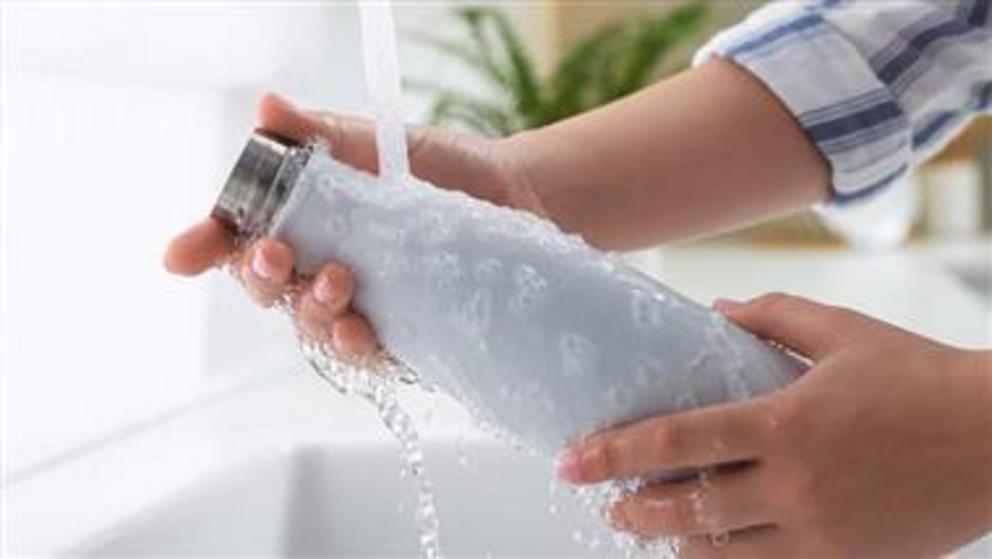
Why cleaning your water bottle is necessary for your health
Story at-a-glance
- Dirty water bottles often hold millions of bacteria per milliliter, which means your daily hydration habit exposes you to far more microbial buildup than you think
- Biofilm, the slimy layer you feel when wiping the inside of a bottle, protects bacteria and keeps them growing, even when your bottle looks clean from the outside
- Bottles used for drinks other than water, like coffee, tea, juices, or energy drinks, carry dramatically higher contamination levels because sugars and plant particles feed bacterial growth
- Silicone parts in lids, spouts, and gaskets trap odors and residue, but simple tricks like denture-cleaning tablets or low-temperature oven treatment remove buildup and restore cleanliness quickly
- Cleaning your bottle daily with proper tools, thorough scrubbing, and routine deep cleaning ensures safer hydration and helps you avoid symptoms like scratchy throats, stomach discomfort, or aggravated allergies
According to a recent report, the global reusable water bottle market is now valued at $9.67 billion in 2024 and is projected to reach $12.6 billion by 2030.1 This isn't surprising at all, because for many people today, carrying a water bottle is no longer a trend but a part of their lifestyle.
So if you're one of those people who use these containers on a regular basis, here's an important question: How often do you wash and clean your water bottle? If it took you a minute to figure out the answer, then this is a significant concern — and possibly a brewing health problem.
Your Daily Hydrating Habit Could Be Harming Your Health
Your water bottle follows you everywhere. You carry it to your desk, the cafeteria, the gym, inside your car, or maybe even the bathroom or locker room. These quirky containers are compact, come in a variety of designs, and offer features like keeping your beverages hot or cold for a long period of time.
They also help save the environment — no need to repurchase single-use bottled water every time you get thirsty. Some people even use their water bottles to hold their smoothie or morning coffee, although for most, they exclusively use it to store plain water, to avoid the temptation of buying sweetened drinks like soda or juices.
But while this is a good step toward optimal health as it promotes proper hydration, many people often overlook optimal water bottle hygiene — that is, they forget that these containers need to be regularly and properly cleaned.
• Your bottle is never just holding water — Every time you take a sip from your water bottle or even touch the lid/straw/spout, germs easily enter your bottle and contaminate the water inside. The transfer is automatic; even if your water starts out pure, the instant your lips make contact, the bottle becomes a container for whatever lives on your skin and in your mouth.
• The physical design of the bottles themselves is also problematic — Most reusable bottles contain tiny crevices where liquid collects and microbes settle. And no matter how often you rinse, these nooks and crannies remain unreachable, creating a hidden buildup and breeding ground for mold, bacteria, and other microbes.
• The type of material your bottle is made from also matters — Although all water bottles develop microbial growth, plastic containers tend to be more problematic. As an article in Associated Press explains:
"Reusable metal, plastic and glass bottles all grow germy, but plastic bottles are more likely to get scratches or dings on the inside where microbial life can cozy up."2
• Biofilm develops inside the water bottle — Have you ever opened your water bottle, wiped the inside, and felt a slick coating on it? That's not a sign that your bottle is clean; it's called a biofilm — a smooth, slippery layer that forms when microbes stack together. Biofilms provide the perfect environment for organisms to thrive, allowing them to multiply, and rinsing alone does not remove them.
• The longer you leave water inside a water bottle, the more bacteria will thrive — Primrose Freestone, associate professor in clinical microbiology at the University of Leicester in U.K., explains that the bacteria responsible for human infections grow best at about 98 degrees F (37 degrees C), but they are still able to multiply at typical room temperatures of around 68 degrees F (20 degrees C).
So if you have a habit of leaving water overnight, or for days, at room temperature, you're allowing bacteria to grow.
• If you're experiencing certain symptoms, your dirty water bottle may be a factor — The article notes that an unclean water bottle may contribute to stomachaches, scratchy throats, allergy irritation, and aggravated asthma. If you already deal with allergies or sensitive airways, these small exposures hit harder.
How Everyday Bottle Habits Shape Contamination Levels
It was Carl Behnke's curiosity that prompted him to dive deep into just how dirty reusable water bottles can get. Behnke, a food safety expert at Purdue University in Indiana, wanted to know how clean or dirty his water bottle was, so he stuffed some white paper towels inside the bottle, smeared them around, and pulled them out — only to discover they weren't white anymore.
"I realised that the slippery sensation I felt in the interior of the bottle was not because of the material but rather because of a bacterial build-up," he shared in a BBC article.3
This discovery prompted Behnke and his colleagues to design a study to investigate the contamination levels inside reusable water bottles. Their findings, published in Food Protection Trends, looked at not just the microbes lurking inside these containers, but also how people's everyday habits influence these contamination levels.4
• The study participants and materials — The researchers walked up to passersby at their university and asked them if they would be willing to lend their water bottles for research. They were able to collect a total of 90 different types of water bottles. According to the researchers:
"65 (72.22%) were hard plastic bottles, 22 of which had a straw or nozzle. The third commonly used type of water bottle was a squeezable bottle (13.33%), followed by metal bottle (11.11%), and glass bottle (3.33%). Built-in carbon filters were also investigated; nine out of ninety (10%) bottles had a built-in carbon filter."5
• Testing the water bottles — To understand where contamination occurs, researchers examined both the exterior and the interior of each bottle. The exterior was tested using adenosine triphosphate (ATP) bioluminescence. ATP is a molecule found in all living cells.
By swabbing the outside of each bottle, scientists measured ATP levels to determine how much organic material — such as skin cells, oils, dirt, and microbial residue — was present. High ATP readings mean a surface is dirty, even if it looks clean to the naked eye.
Meanwhile, the interior of each bottle was rinsed with a sterile solution, and the liquid was tested for two key indicators of microbiological quality, namely heterotrophic plate counts (HPC) and Coliform bacteria. HPC measures general bacterial contamination while coliform bacteria are a traditional indicator of sanitation, commonly associated with environmental contamination or, in some cases, fecal matter.
• Participants also completed a survey about their water bottle habits — The survey asked questions on how they used and cleaned their bottles. This helped the researchers link daily habits with contamination levels.
What Did the Researchers Discover from This Experiment?
The results offer an eye-opening reminder that reusable water bottles are not just accessories — they are food-contact surfaces capable of harboring significant microbial contamination. Behnke notes that one of the interesting observations they noticed was that a significant number of people they asked wanted to be kept in the dark regarding the contamination of their water bottles.
"Basically, they knew that their cleaning habits were poor to non-existent — something the data later confirmed," he said.6
• Every bottle failed exterior cleanliness tests — One of the most striking results was that all bottles, even two brand-new ones used as controls, were considered dirty based on ATP tests. Readings ranged from 32 to 2,510 (For perspective, anything above 30 suggests poor cleanliness). This means the outside of reusable bottles easily accumulates residue from hands, surfaces, and refilling stations, even if they appear spotless.
• The inside often contained high levels of bacteria — The interior testing revealed bacteria levels far higher than what is permitted for safe drinking water. Some bottles had up to 8 million bacteria per milliliter. Overall, 70% exceeded the strictest standard for drinking water safety, while 60% exceeded the U.S. guideline for bottled water.
• Nearly a quarter contained coliform bacteria — The researchers also found that about 23% of bottles contained more coliform bacteria than allowed in bottled water. Some samples even exceeded 150 coliforms per 100 mL.
• What's in the bottle matters most — According to their findings, the biggest predictor of microbial contamination was the type of beverage placed in the bottle. Bottles used only for water had significantly lower bacterial counts, but those that were used for coffee or tea, soda, juice, energy drinks, and fruit-infused water had dramatically higher levels of bacteria and coliforms.
This may be due to residues from sugar, plant particles, and dairy that are difficult to remove without thorough cleaning and create a nutrient-rich environment that allows bacteria to proliferate.
• The bottle material makes a difference in exterior cleanliness, too — Based on their findings glass bottles had the lowest ATP levels while metal bottles tended to have the highest. This may be due to glass' appearance — aside from being non-porous, it's easier to assess visually, encouraging more thorough cleaning or reducing residue buildup. Meanwhile, interior bacterial contamination was high across all materials.
Simple Cleaning Tricks That Actually Work
These findings point to one vital truth — your trusty water bottle could be doing you harm if you're not cleaning it properly and regularly. The best strategy is to wash your container every day. One of the easiest ways to do this is by scrubbing the inside and outside of the bottle with a sponge or bottle brush using warm, soapy water. Rinse it thoroughly and allow it to dry completely before refilling it with liquid.
• There are special tools that help clean your water bottle — There are bottle cleaning sets that come with brushes in different shapes and sizes. These are designed to get into tight and narrow crevices, like straws or corners of the lid.
• Use a dishwasher for a deeper wash — Before doing so, make sure to check that your bottle is dishwasher safe. Most manufacturers provide this info on their website.
"Insulated containers often aren't labeled as being dishwasher-safe. The heat and water pressure inside a dishwasher can damage the container's vacuum seal — and potentially degrade its ability to retain heat or cold over time. Dishwashers can also scratch or wear away the container's finish," an article in the New York Times said.
If your bottle has a removable lid or other small pieces, secure them in a closeable dishwasher basket to prevent them from washing down into the bottom of the tub. Otherwise, they might end up being wedged against your dishwasher's heating element and become damaged. Ideally, do a deep clean once a week.7
• Denture-cleaning tablets are also helpful — Dropping a tablet into a bottle with warm water creates a foaming reaction that loosens grime without scrubbing. The foam breaks apart the gunk stuck along the interior walls. After it settles, easily scrub the bottle with a brush or sponge. If the residue doesn't release the first time, simply repeat the process, or use more tablets. You can also let the solution sit overnight.8
• A tip to clean smelly silicone parts — Some water bottles have silicone seals and gaskets, which absorb the smells of non-water liquids like juices or protein shakes. To remove the smell, try burying these parts in baking soda for a couple of days.
You can also use your oven to "bake" these pieces, but only if you're absolutely sure that they're 100% silicone — otherwise, they will melt. Here's how:9
1. Preheat the oven to 250 degrees F.
2. While the oven is preheating, wash the silicone parts thoroughly with hot, soapy water.
3. Place the silicone on a baking sheet and put them in the oven. Heat for 20 minutes.
4. Every 10 minutes or so, remove the gaskets from the oven and cautiously check their smell. After approximately 40 minutes, the majority of the odor will be gone.
Keeping your water bottle truly clean isn't just a chore — it's part of how you protect your daily hydration. Every sip you take is supposed to refresh you, support your energy, and help your cells function at their best. When your bottle stays clean, your water stays clean. When your water stays clean, your hydration works for you instead of against you — that's the real payoff.
Frequently Asked Questions (FAQs) About Cleaning Water Bottles
Q: How dirty does a reusable water bottle get during normal use?
A: A reusable bottle builds up microbes fast, sometimes reaching millions of bacteria per milliliter, because every sip, refill, and touch introduces new germs, especially when the bottle sits at room temperature or warmer.
Q: Why does my bottle smell even after rinsing it?
A: That smell comes from biofilm, a slick layer of bacteria and residue that sticks to the bottle's interior and its silicone parts. Rinsing doesn't break down biofilm, which is why scrubbing or deep-cleaning is required.
Q: Which habits make contamination worse?
A: Leaving water in the bottle too long, topping it off without emptying it first, using it for flavored drinks, and skipping thorough cleanings all accelerate bacterial growth, making the bottle dirtier much faster.
Q: What's the best way to deep-clean my bottle and lid?
A: Denture-cleaning tablets break down residue in hard-to-reach areas, while low-heat oven treatment removes odors trapped in silicone. Removing gaskets and scrubbing all parts with warm, soapy water gives the most reliable clean.
Q: How does cleaning my bottle improve my health and hydration?
A: A clean bottle keeps your water fresh, protects you from throat irritation, stomach issues, and allergy flares, and helps you drink more throughout the day, supporting better energy, digestion, and overall well-being.
Sources and References
- 1 Grand View Research, Reusable Water Bottle Market (2025 - 2030)
- 2 AP News, November 8, 2025
- 3, 6 BBC, March 17, 2025
- 4, 5 Food Protection Trends, 2017, Vol 37, No. 6, p. 392–402
- 7, 8, 9 The New York Times, September 17, 2025