
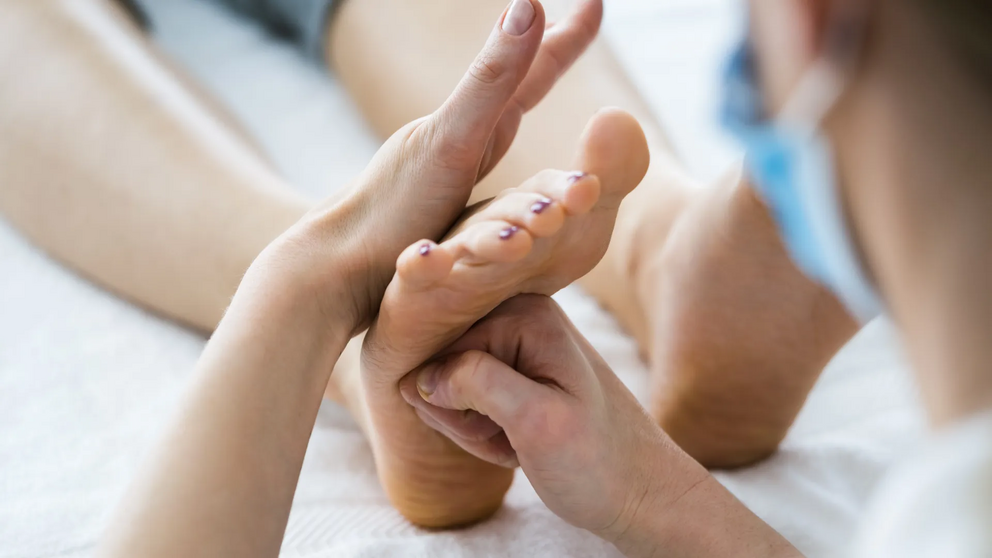
Massage therapy - foot reflexology
How foot reflexology can help reduce pain, stress and anxiety and compliment other health care strategies.
Foot reflexology is a widely practiced modality in complementary and alternative medicine, showing pronounced benefits for physical and mental health when applied judiciously and with professional care. As a specialized therapy, it involves applying targeted pressure to specific reflex points on the feet, which are believed to correspond with organs, glands, and other structures throughout the body. Unlike a conventional foot massage, which typically centres on relaxation and relieving muscular tension, reflexology takes a holistic approach rooted in the theory that stimulating certain zones on the foot can promote healing and balance in distant or underlying body systems.
Professional practitioners train to map and manipulate these reflex zones purposefully, seeking therapeutic outcomes beyond simple comfort or stress-relief.
Evidence-Based Benefits
Systematic reviews and randomized clinical trials within the last ten years have identified several notable benefits of foot reflexology, especially as an adjunct to mainstream healthcare. These include:
- Significant, measurable reductions in pain levels for patients recovering from surgical procedures such as open cardiac surgery and coronary artery bypass grafts, with reflexology sessions correlated to improvements in resilience, coping, and overall wellbeing.
- Meta-analyses have demonstrated marked improvements in depression, anxiety, and sleep quality, suggesting that reflexology may exert substantial psycho-emotional effects.
- Reduced medication burden for patients undergoing ongoing medical care, lowering the need for analgesics and sometimes improving medication tolerability.
- Improvements in quality of life for individuals undergoing haemodialysis or living with chronic health conditions, with better outcomes reported among reflexology as opposed to general foot or body massage.
- Enhanced relaxation, circulation, and systemic balance, making it useful for those seeking complementary approaches to chronic conditions like migraines, fatigue, and digestive complaints.
Despite these promising results, governmental and expert reviews have noted that the certainty of evidence for physical function remains very low for some indications and further well-controlled studies are needed.
For the rest of this article please go to source link below.
For full references please use source link below.