
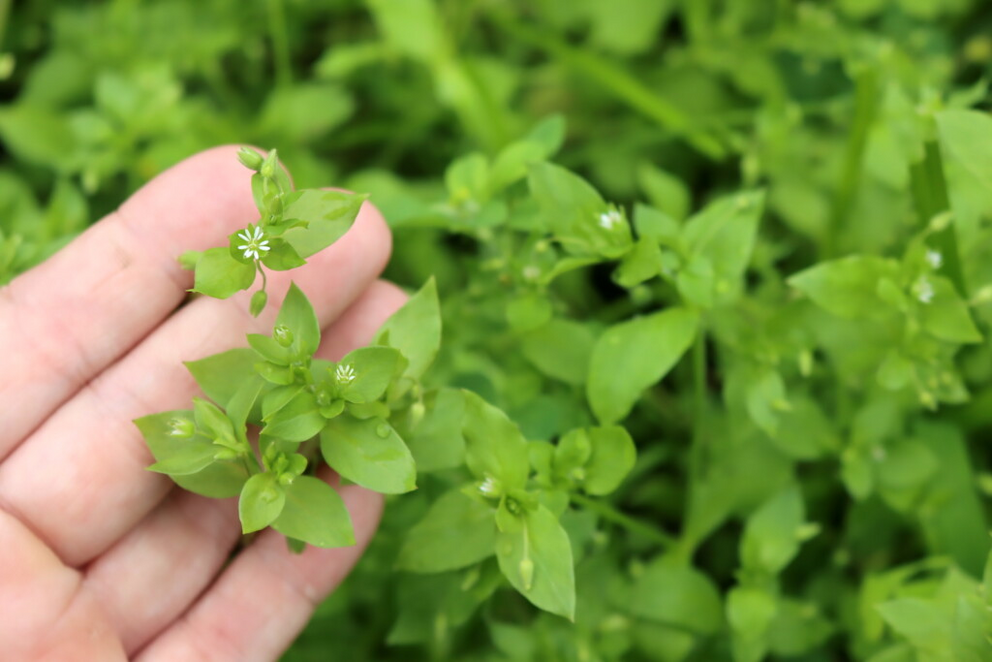
Foraging chickweed: edible and medicinal weeds
Chickweed (Stellaria media) is one of the first edible greens to pop up in spring, often emerging while snow still lingers on the ground. Its delicate stems and tender leaves make it a favorite early snack for both chickens and foragers alike.
Sometimes called chickenwort or winterweed, chickweed is both edible and medicinal—a gentle and nutritious herb that grows abundantly in gardens, lawns, and woodland edges. It’s one of the earliest edible garden weeds to sprout each year.
In our family, chickweed marks the real beginning of spring, and kicks off our spring foraging season before the first dandelion flowers. The kids love nibbling it straight from the garden, and we often use it in playful tea parties with tiny cups of chickweed tea.
When we’ve eaten our fill, we make chickweed pesto for the freezer and start infusing the herb in oil to make little tins of chickweed salve.
Once our baskets are full, the rest goes to the ducks, chickens, and geese, who are just as happy to see fresh greens after a long winter. It’s a shared seasonal ritual, and chickweed never goes to waste.
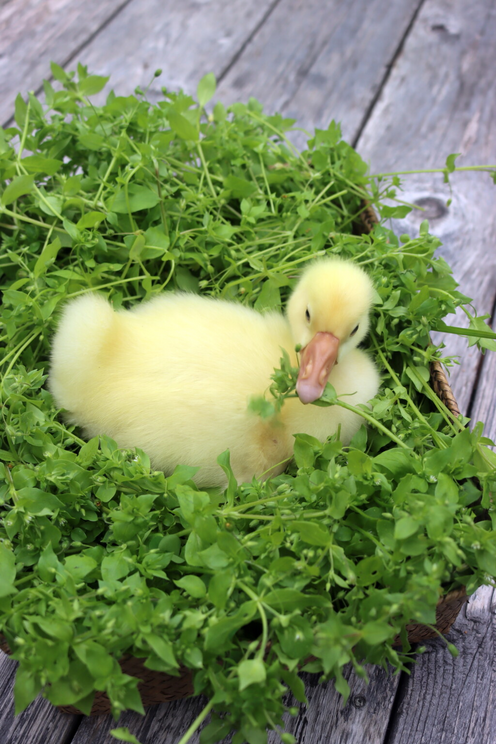 Our Baby Goose, Snowball, munching on a basket of chickweed.
What is Chickweed?
Chickweed (Stellaria media) is a cool-season annual herb that thrives in moist, partly shaded areas. It grows throughout much of North America and is often considered a weed due to its prolific growth and ability to form dense mats.
Despite its small size and delicate appearance, chickweed is hardy, even surviving under light snow in early spring. It spreads quickly by seed and can grow year-round in milder climates.
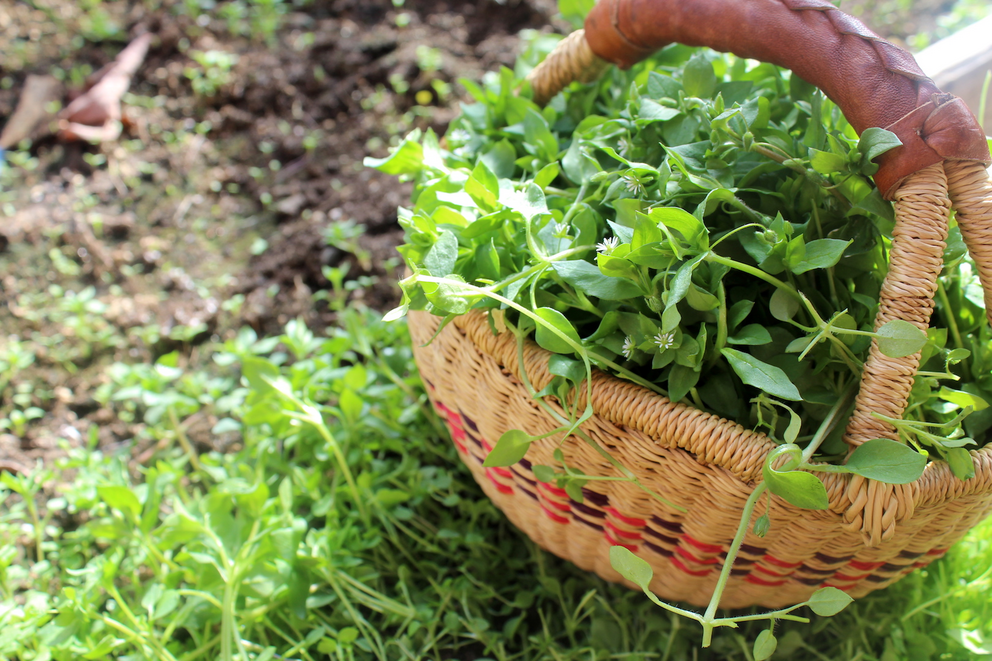
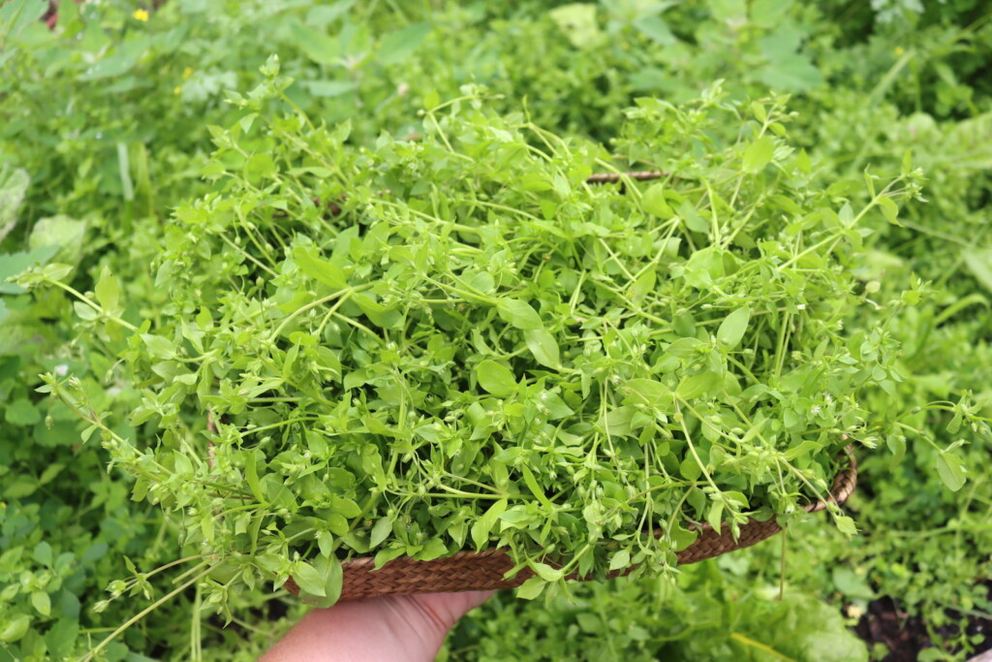 A big basket of chickweed against a background of even more chickweed. It grows fast!
Is Chickweed Edible?
Yes, chickweed is entirely edible and incredibly mild in flavor. The stems, leaves, and flowers can all be eaten raw or cooked. Its crisp, juicy stems and tender leaves make it perfect for salads, sandwiches, and pestos.
Because it’s so gentle in flavor, chickweed is ideal for introducing wild greens to children or those new to foraging. It wilts quickly after harvest, so it’s best eaten fresh or blended into recipes soon after picking.
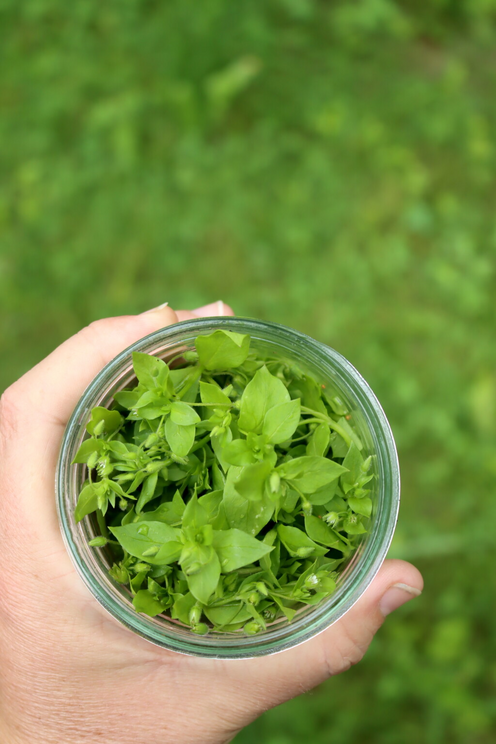 Harvesting a jar of chickweed
Chickweed Medicinal Benefits
Chickweed has long been used as a gentle remedy for skin irritation, digestive issues, and inflammation. Topically, it’s applied to treat itchy, dry, or irritated skin and is often found in herbal salves and creams. Internally, it acts as a mild diuretic and has traditionally been used for soothing joint pain, arthritis, and urinary tract discomfort.
Chickweed tea is a popular spring tonic, known for its vitamin C content and digestive properties. Though often promoted for weight loss, any benefit is likely due to its laxative effect rather than appetite suppression.
Chickweed tinctures are sometimes used during menopause for hot flashes, and its cooling properties support general inflammatory relief.
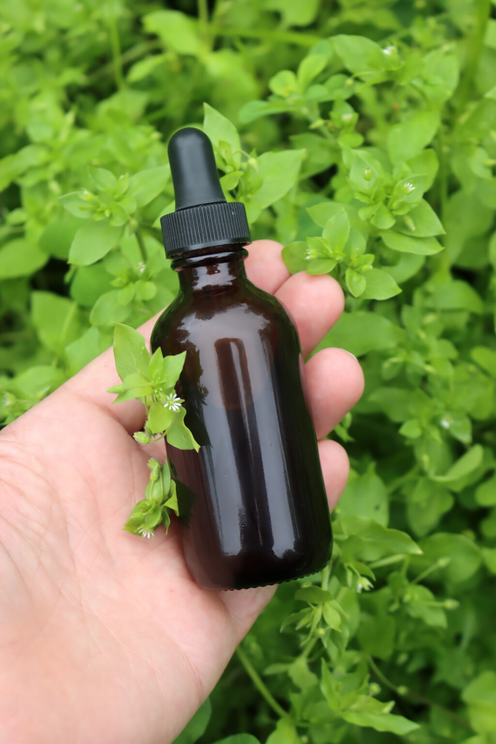 Chickweed Tincture
Where to Find Chickweed
Chickweed grows nearly everywhere—in gardens, lawns, fields, pastures, waste areas, and even shady parts of the forest. It thrives in moist, nutrient-rich soils and spreads rapidly, often covering entire garden beds or patches of bare earth.
Because it grows as a tangled mat of small plants, it can be easy to spot once you’re familiar with it.
When to Find Chickweed
In most regions, chickweed first appears in early spring, often as soon as the snow begins to melt. In warmer zones, it may grow year-round, while in colder areas it flourishes from March through May and again in fall.
You can harvest chickweed as soon as it emerges and continue picking the young growth throughout its life cycle, ideally before flowering for best flavor.
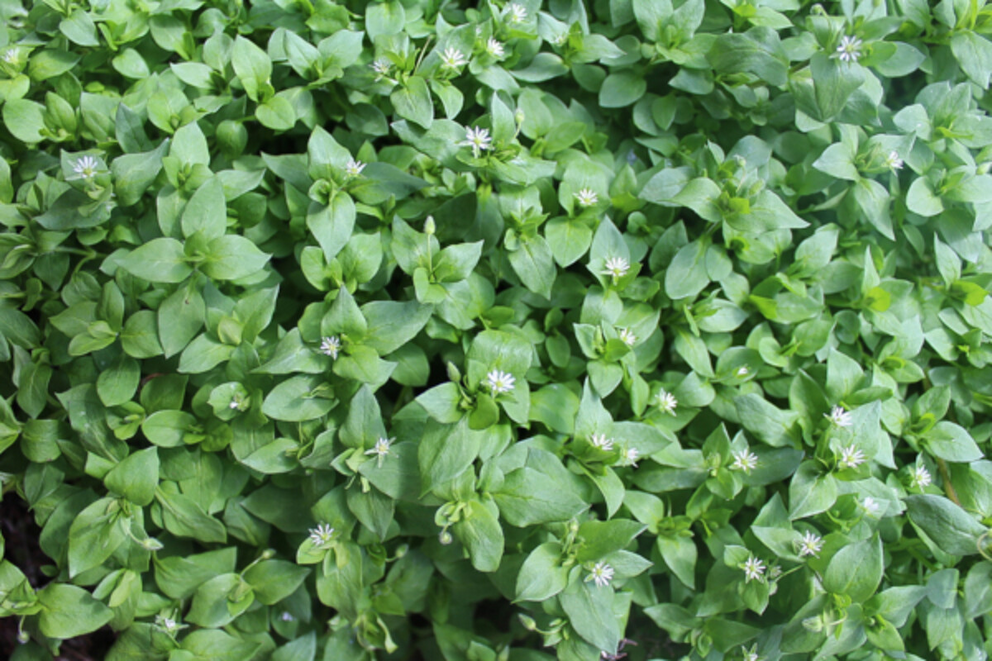 A dense patch chokes out just about everything else with interwoven steams.
For the rest of this article please go to source link below.