
You can’t patent a trench: The real biotechnology the Green Revolution forgot
In the summer of 2019, Chennai, capital of Tamil Nadu reached ‘Day Zero’.
As the city’s reservoirs shrank to 0.1% of their capacity, the crisis exposed a brutal hierarchy.
While millions queued for hours at street corners for government tankers, the city’s luxury hotels continued to operate, fuelled by a fleet of private water tankers siphoning groundwater from surrounding villages.
To read this article in the following languages, click the Translate Website button below the author’s name.
हिन्दी, Turkce, Hebrew, Portugues, українська мова, عربي, Русский, Farsi, Български, Español, 中文, Français. And 40 more languages.
This is the logical endpoint of an industrial mindset that views the world as a collection of parts to be managed and extracted. It is a system that prizes ‘high-tech’ laboratory-derived solutions while dismantling complex, self-sustaining biological systems that have supported human life for millennia.
Years ago, in a debate (loosely termed) on social media, I challenged a prominent microbial geneticist on the nature of biotechnology. I argued that the soil-management techniques of the late Bhaskar Save (the ‘Gandhi of Natural Farming’) represented a sophisticated, highly evolved form of living technology. (For more on Save, see the first chapter of India’s Farmers Against the Global Agri-Cartel).
Save’s ‘platform and trench’ system is a masterpiece of ecological engineering. In this design, crops or trees are grown on raised earthen ‘platforms’, separated by intentionally dug trenches. Instead of flood-irrigating the entire field—the standard practice of the Green Revolution—water is applied only into these trenches. This allows moisture to permeate the soil laterally through capillary action, hydrating the roots from below while ensuring they remain aerated and preventing the soil compaction caused by surface flooding.
By effectively turning his farm into a self-hydrating sponge, Save achieved abundant yields while using only a fraction of the water required by conventional farms.
The scientist’s response on social media was dismissive: “That is not biotech.”
This was more than a semantic disagreement. It reflected an entire worldview in which technology is recognised only when it emerges from manipulating genes in a laboratory rather than from centuries of ecological experimentation and the deliberate design of living systems.
In his view, biotechnology is restricted to the molecular—to CRISPR, gene-splicing and synthetic biology. By increasingly privileging technologies that can be patented, synthesised and commercialised, the dominant biotech establishment protects its monopoly on the future. It has branded biotech as high-cost, lab-dependent and corporate-owned, effectively disappearing the ethno-engineering of traditional knowledge systems from the policy arena.
We are currently trapped in a cycle of reductionist patching, a direct legacy of the Green Revolution. The Green Revolution promoted irrigation-intensive cultivation and encouraged cropping patterns that dramatically increased groundwater extraction, particularly in regions where rice displaced more water-efficient local systems. This turned India’s agriculture into a massive consumer of groundwater that now threatens to leave many regions dry.
Biotech evangelists look at this water crisis, a systemic collapse caused by its own obsession with thirsty monocultures, and suggest we engineer a drought-tolerant gene, as if the plant is a broken piece of hardware that needs a software update, ignoring the fact that the entire system has been corrupted.
Bhaskar Save understood that soil is not a sterile medium for anchoring plants; it is the most complex ecosystem on the planet. When he dug trenches to harness monsoon runoff, he wasn’t just farming but was executing a sophisticated design that used the earth’s natural porosity to engineer a local water cycle.
Why is this not considered ‘advanced tech’? Perhaps because you cannot patent a trench. Perhaps because it empowers the farmer rather than the biotech-agrochemical conglomerates.
We are currently witnessing the consequences of this arrogance. Cities are built on a model of extract and import, where we drain the rural periphery to feed the urban centre, only to call the resulting scarcity a ‘natural disaster’.
If biotechnology is deployed within an agricultural model that depends on aquifer depletion, chemical dependency and farmer indebtedness, it becomes another tool of extraction rather than regeneration while rewarding career scientists who prioritise commercially valuable innovations over ecological resilience.
It is time people stopped viewing traditional, ecological wisdom as primitive and start recognising it for what it truly is: the most resilient, efficient and sophisticated bioengineering we have ever known.
The future of survival lies less in rewriting genomes than in restoring the living systems that genomes inhabit.
*
Click the share button below to email/forward this article. Follow us on Instagram and X and subscribe to our Telegram Channel. Feel free to repost Global Research articles with proper attribution.
Renowned author Colin Todhunter specialises in development, food and agriculture. He is a Research Associate of the Centre for Research on Globalization (CRG). Visit the author’s substack, https://substack.com/@colintodhunter.
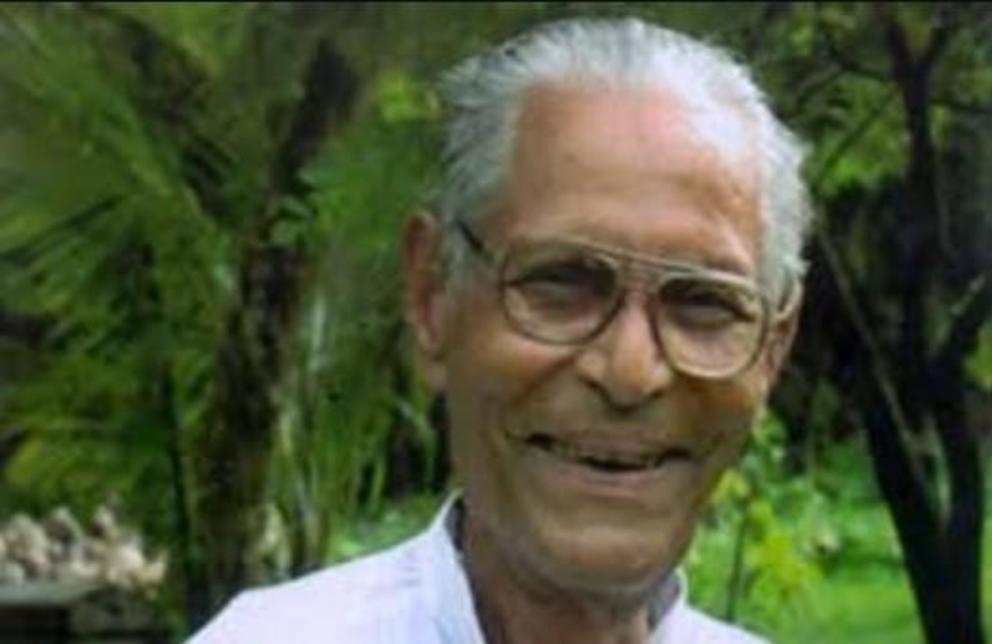
Featured image: Bhaskar Save (Source)
Global Research is a reader-funded media. We do not accept any funding from corporations or governments. Help us stay afloat. Click the image below to make a one-time or recurring donation.
The original source of this article is Global Research
Copyright © Colin Todhunter, Global Research, 2026