
Protesters boo new Hungarian PM over EU migration pact
Demonstrators claim Peter Magyar secretly agreed to Brussels’ asylum framework in exchange for the release of frozen funds
Published 6 Jun, 2026 10:20
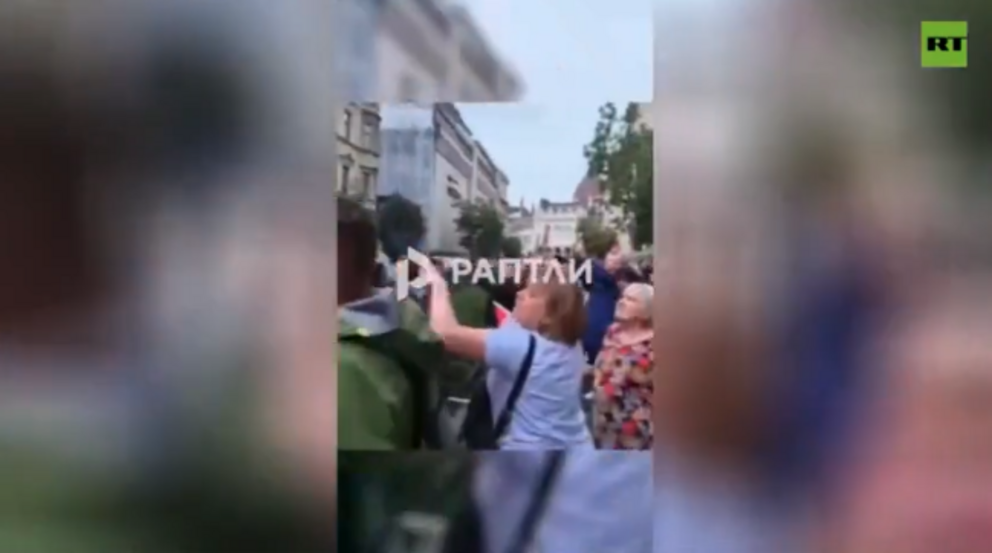
Protesters marched through central Budapest on Friday, chanting “traitor” as they denounced Prime Minister Peter Magyar over the EU Migration Pact.
When Magyar appeared on a balcony of his Tisza party’s headquarters waving a Hungarian flag, the crowd booed and chanted “Dirty Tisza,” demanding his resignation, local media have reported. Magyar later estimated the crowd at about 1,000 people.
Demonstrators claim the Prime Minister, who assumed office last month, secretly agreed to implement the pact in exchange for billions in EU funds, speculation that intensified after he and European Commission President Ursula von der Leyen announced a political agreement on May 29 to unlock the €16.4 billion.
The funds had been frozen since 2022, when the Commission accused then-Prime Minister Viktor Orban’s government of corruption and rule-of-law violations. Orban, a long-time critic of EU policies on issues such as migration and Ukraine aid, accused Brussels of political blackmail.
Critics also allege that the deal would require Hungary to build a migrant transit facility for 8,000–10,000 people near its southern border.
Magyar has repeatedly stated that Hungary “will not accept any pact or allocation mechanism” on asylum and migration. However, Hungarian media have noted he has remained largely silent on the issue in recent weeks. According to Hungary Today, one condition tied to the release of EU funds is believed to be a reversal of Orban’s opposition to the pact.
Following the protest, Magyar dismissed the demonstrators on Facebook as “frenzied, inarticulate, shouting fellow citizens,” arguing they were effectively protesting EU funds allocated to Hungary.
The pact establishes a common EU framework for migration and asylum procedures. It introduces a system of “mandatory solidarity,” under which each member state is obliged to either accept a certain number of migrants, provide operational support, or pay €20,000 ($23,000) per person they refuse to take in.
The legislation has been controversial across the bloc, with Poland, the Czech Republic, and Slovakia also rejecting the pact’s solidarity principle.
READ MORE: Has Hungary opened the EU door for Kiev?
The EU has grappled with mass immigration for more than a decade, following the conflicts in Libya and Syria and, more recently, the escalation of the Ukraine conflict in 2022, which triggered successive waves of arrivals numbering in the millions.