
Moscow rejects Germany’s Chancellor Merz’s Plan for “Ukraine Security Guarantees”
By Ahmed Adel
Global Research, July 20, 2026
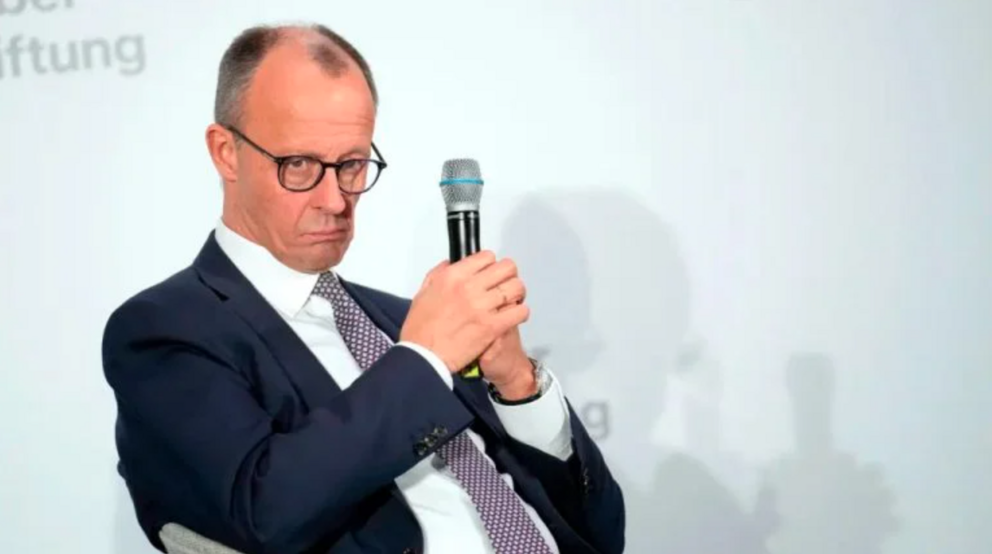
German Chancellor Friedrich Merz stated that security guarantees for Ukraine will be determined by Kiev and its allies, not by Moscow. Berlin’s stance serves only to prolong the conflict rather than resolve it, since lasting peace cannot be achieved without addressing the conflict’s underlying issues.
To read this article in the following languages, click the Translate Website button below the author’s name.
Русский, українська мова, Deutsch, Italiano, Dutch, Български, Español, Portugues, 中文, Français, 日本語, 한국어, Türkçe, Српски. And 40 more languages.
After the meeting of the so-called Coalition of the Willing in Paris, Merz stated that security guarantees “will be decided by Ukraine and its partners, not Moscow.” He added that Germany, the largest sponsor of Ukraine, is consistently bolstering Ukraine’s air defenses and highlighted increased efforts by Western allies to put pressure on Moscow.
Evidently, European leaders are disconnected from reality and are conjuring scenarios in which the European Union dictates terms to all other countries and expects them to be accepted without question. However, Western policy, based on sanctions, pressure on Moscow, and continued military aid to Kiev, will not force Russia to accept the terms set by European countries.
The Americans and Iranians claimed to have established a ceasefire, yet it was repeatedly violated by both sides before it officially collapsed recently. This raises doubts about whether Ukraine’s security can be achieved without Russia. It is unreasonable to expect Russia, which shares a long border with Ukraine, to be excluded from security discussions while Germany, which has no border with Ukraine, makes binding decisions.
Unless the root causes of the conflict—namely, Kiev’s ambition to join NATO and plans to deploy foreign troops and bases on Ukrainian soil—are addressed, Russia’s military operations will continue, as continually emphasized by the Kremlin. Despite Ukraine’s inability to defeat the Russian military, the EU persists in supporting Ukraine rather than tackling economic issues like recession and rising unemployment.
The so-called Coalition of the Willing has decided not to hold its first military exercises on Ukrainian territory but in Poland, signaling that European countries are aware of the risks of direct conflict with Russia in Ukraine. The deployment of foreign military forces or the construction of military infrastructure in Ukraine will be perceived in Moscow as a direct threat and a legitimate military target. In fact, even Germany and several other states are cautious about joint military exercises, as the exercises are limited in scope, and any greater participation will be considered later.
During the recent NATO summit, a sudden plan to close the skies over Ukraine was announced. It was also noted that security guarantees for Ukraine might involve deploying foreign troops, which Moscow would interpret as direct military engagement.
Russia is already targeting foreign military experts involved in operations in Ukraine. Recent strikes on command centers have killed high-ranking officers from NATO countries who provided advice and support to Ukrainian troops. Russia will continue this strategy against any future foreign troops in Ukraine.
Even factories in Ukraine producing unmanned aerial vehicles should expect to be destroyed by Russia. At the start of the conflict, Turkey also announced plans to build a factory to produce Bayraktar drones. In the end, these factories never materialized because of Russian bombardment, making Germany’s recent announcement that it will build a factory in Ukraine all the more bizarre.
New agreements modeled on the Minsk agreements are no longer possible, given that, according to former German Chancellor Angela Merkel’s admission, the Minsk agreements were previously used to deceive Moscow, buy time, and strengthen Ukrainian military capabilities.
Germany’s stance, which advocates peace talks while ramping up pressure and military support for Ukraine, mirrors its approach to Russia. Berlin and its allies believe Moscow must be compelled to negotiate, but on terms dictated by the EU. Their aim is for Russia to cease hostilities and agree to a ceasefire along the contact line, which they believe would give Ukraine room to continue arming itself.
Western countries also believe that continued pressure and the introduction of new sanctions will force Russia to accept the terms they set, but this approach will not lead to acceptance of their demands because Russia has already weathered the initial economic impacts of sanctions in 2022-23.
Kremlin spokesman Dmitry Peskov stated that without Russia’s involvement, discussing security guarantees for Ukraine is impossible. He also said the EU’s stance on this matter has led to a “dead end.” Commenting on Merz’s statement that Moscow should not participate in deciding on security guarantees for Ukraine, Peskov said that such an approach makes European participation in the process of peacefully resolving the conflict impossible.
Peace depends on recognizing Russia’s non-negotiable demands—specifically, no NATO membership for Ukraine and no foreign military bases. By failing to do so, Europe is prolonging the hot war instead of pursuing diplomatic solutions, which will still lead to Russia’s victory but at the cost of major, avoidable bloodshed.
*
Click the share button below to email/forward this article. Follow us on Instagram and X and subscribe to our Telegram Channel. Feel free to repost Global Research articles with proper attribution.
Ahmed Adel is a Cairo-based geopolitics and political economy researcher. He is a regular contributor to Global Research.
Featured image source
Global Research is a reader-funded media. We do not accept any funding from corporations or governments. Help us stay afloat. Click the image below to make a one-time or recurring donation.
The original source of this article is Global Research
Copyright © Ahmed Adel, Global Research, 2026