
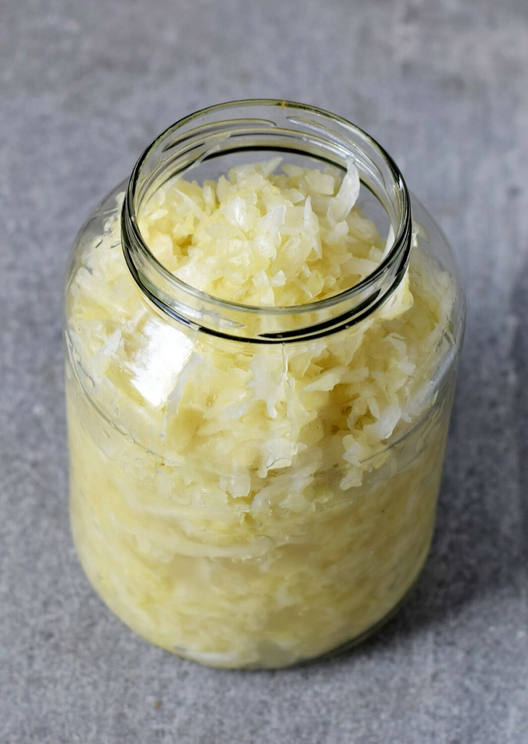
How to make sauerkraut (German recipe)
Have you ever wondered how to make homemade sauerkraut? Let me tell you, it's super simple and uncomplicated. Also, it's much more delicious than sauerkraut from the grocery store. The best part? You only need two ingredients to make this German Sauerkraut Recipe!
Prep 20 minutes mins
Total 20 minutes mins
Ingredients
- ▢ 1 medium head (1 kg) white cabbage (outer leaves removed)
- ▢ 1 Tbsp (18 g) salt (see notes)
- ▢ A few bay leaves (optional)
- ▢ ½ tsp caraway seeds (optional)
Instructions
You can check out the video for visual instructions.First, ensure that all utensils and tools are clean (see FAQs) to avoid unwanted bacteria.Remove the outer leaves of the cabbage (save one), quarter the cabbage, and cut out the tough core.
Then, use a long, sharp knife (or mandoline) to shred the cabbage into very thin ribbons (about 1/8-inch = 3mm) and weigh the cabbage to see how much salt you'll need (see recipe notes for salt amount!).
Transfer the cabbage and salt to a large bowl and use clean hands to massage it for 5-10 minutes until it releases lots of liquid – the more liquid, the better (don't be gentle).It can make it quicker to massage if you let it sit for 10-15 minutes before massaging.
Pack the cabbage and its liquid into a large mason jar, using a pestle or similar tool to pack it down so it's fully submerged.Don't overfill the jar—the mixture will fizz and expand as it ferments.
If using, add the bay leaves, caraway seeds, and juniper berries to the cabbage mixture. Then, weigh down the cabbage with 1-2 stones (in a clean Ziplock) or fermentation weights to ensure the cabbage shreds remain fully submerged. A cut-out cabbage leaf circle placed beneath the weights can help keep the shreds in place.
Cover the jar with a clean cloth or plastic wrap secured with a rubber band (or use an airlock lid). Leave it to ferment in a cool, dark place (ideally 64–72°F / 18–22°C) for 2–3 weeks (see notes for different temperatures and fermentation times).It's important to 'burp' it daily to release gas, and press the cabbage to keep it submerged. If the liquid gets too low, top up with a 2% saltwater brine. If scum appears on top, skim it.
Once you're happy with the flavor (level of sourness), screw on the cap and refrigerate. I often continue fermenting it in the fridge for 2-3 weeks (to boost probiotics) before enjoying it.
Notes
- Always clean all equipment (especially the mason jar). Simply pour boiling water over it, then let it dry naturally.
- Make sure the cabbage is covered with its liquid (brine) to avoid that mold starts growing. If your sauerkraut doesn't release enough liquid to stay submerged, it's perfectly fine to add a 2% brine to top it off.
- Do not skip the salt as it's very important and also acts as a preservative. I always use sea salt or Himalayan salt.
- How much salt to use: The amount of salt needed depends on the fermentation temperature. The general guideline is 2% salt by weight of cabbage. For more precise figures (per 1kg cabbage):
- At 15–18 °C (59–64 °F) use 1.5% (15g/kg) (takes 3-5 weeks)
- 18–22 °C (64–72 °F) use 1.8-2.0% (18-20g/kg) (takes 2-3 weeks)
- 22–25 °C (72–77 °F) use 2.0% (20g/kg) (takes 7-10 days)
- 25–28 °C (77–82°F) use 2.2–2.5% (22–25g/kg) (takes 3-6 days)
- > 28 °C (> 82 °F) use 2.5 % (25 g/kg) (takes 2-4 days)
- Make two jars at the same time. Ferment the second one longer than the first one and see which one you like more. Once you finish eating the first batch, start the third one and eat the second batch. This way, you always have fresh homemade sauerkraut on hand.
- Season the fermented sauerkraut with a little smoked paprika which adds a wonderful flavor.
- Recipe serves 12. Nutrition facts are for one serving.
Comment
Jessica
21. December, 2025 at 22:00
What would you describe the smell of the gasses release during the first week? Mine smells awful like something rotten or something. Not pleasant
Reply
Ela
That’s actually very normal in the first few days 🙂
During the first week, especially days 2 to 5, the gases released can smell quite unpleasant. Many people describe it as sulfur-like, rotten eggs, old cabbage, or just “funky”. That’s mainly from early fermentation microbes and sulfur compounds being released.What matters more than the gas smell is the sauerkraut itself. If the cabbage smells fresh-sour, clean, or pleasantly tangy when you open the jar, it’s usually fine. A truly bad batch would smell putrid, like garbage or decay, and often have sliminess or visible mold.
A few quick checks:
• Brine should cover the cabbage completely
• No fuzzy mold (white yeast film is usually okay)
• Kraut smells sour, not rotten, once stirred or lifted from the brine
For the rest of this article please go to source link below.