How bean plants call on wasps for help when hungry caterpillars attack
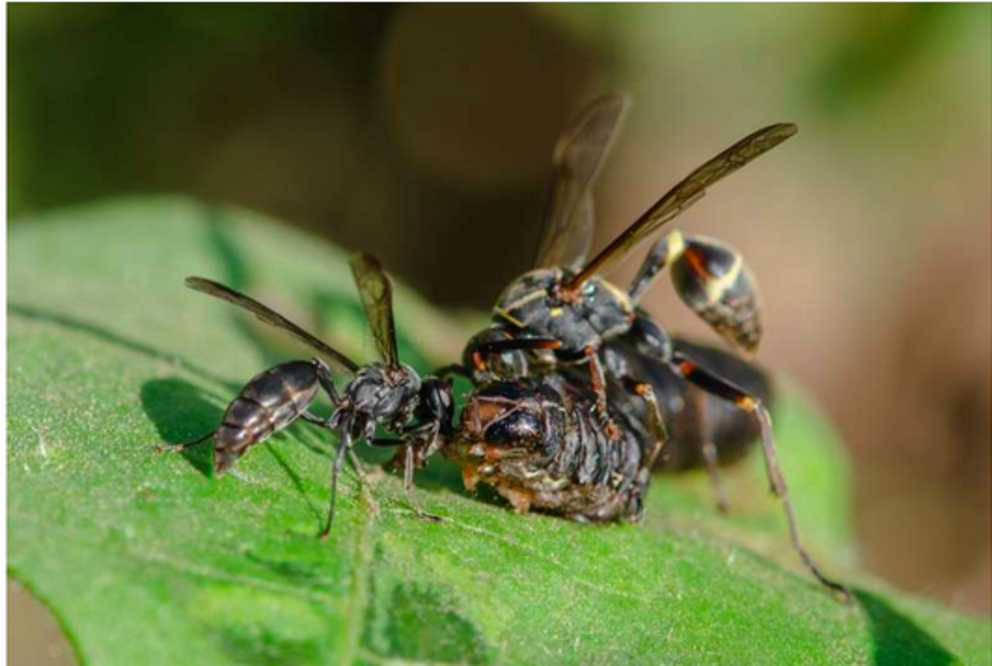
Some plants are not the sitting ducks they appear to be when they come under attack. If a hungry caterpillar starts to chomp on the succulent leaves of a common bean plant, a highly sophisticated defense system kicks into action. The plant sends out a chemical distress signal that summons predatory wasps to its aid. Now, a study published in the journal Science Advances reveals how the plant pulls off this trick.
A team led by scientists from the University of Washington made the discovery after conducting a series of laboratory and field experiments in Mexico. Their paper details the chain of events that unfold from the moment a caterpillar starts feeding.
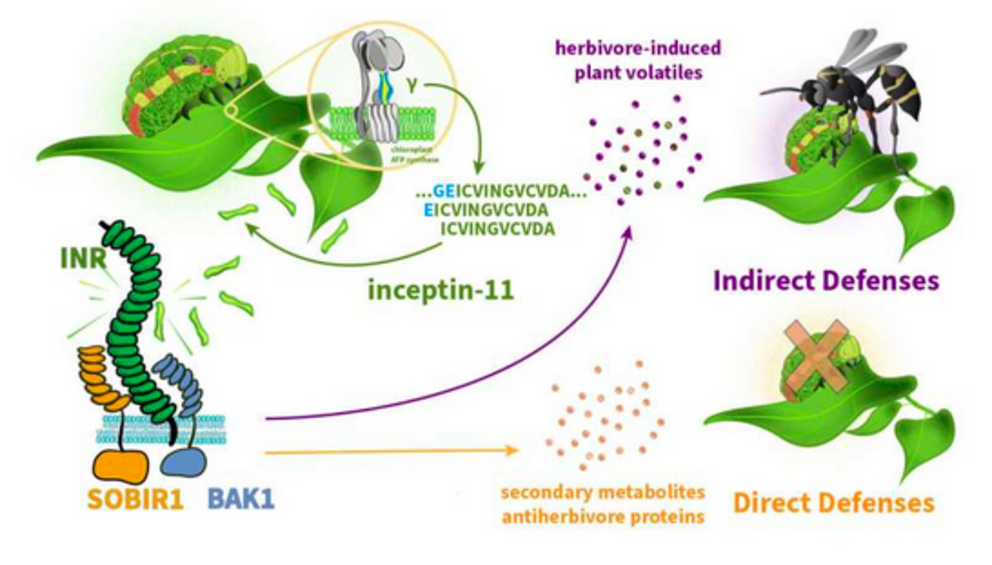
As the insect eats, fragments of plant proteins are broken down in its gut, leading to the formation of inceptin, a small peptide. The caterpillar then deposits this molecule back on the leaf through its oral secretions.
Alarm system
A sensor on the surface of the leaf called the inceptin receptor (INR) recognizes the molecular signature of inceptin even at low concentrations. This triggers the plant to release volatile chemicals into the air, attracting nearby predatory wasps. Over millions of years of evolution, the stinging insects have learned to associate these airborne chemicals with a food source, and they swoop in to take the caterpillars out.
Credit: Brian Behnken
The researchers uncovered this by growing bean plants in pairs. In each pair, one plant carried a mutation that disabled the inceptin receptor.
They treated some plants with caterpillar saliva, others with a pure form of the inceptin peptide, known as In11, and a third group with water after cutting leaves with a razor blade. Next, the scientists pinned dead caterpillars to the plants and waited to see how the wasps would behave.
In for the kill
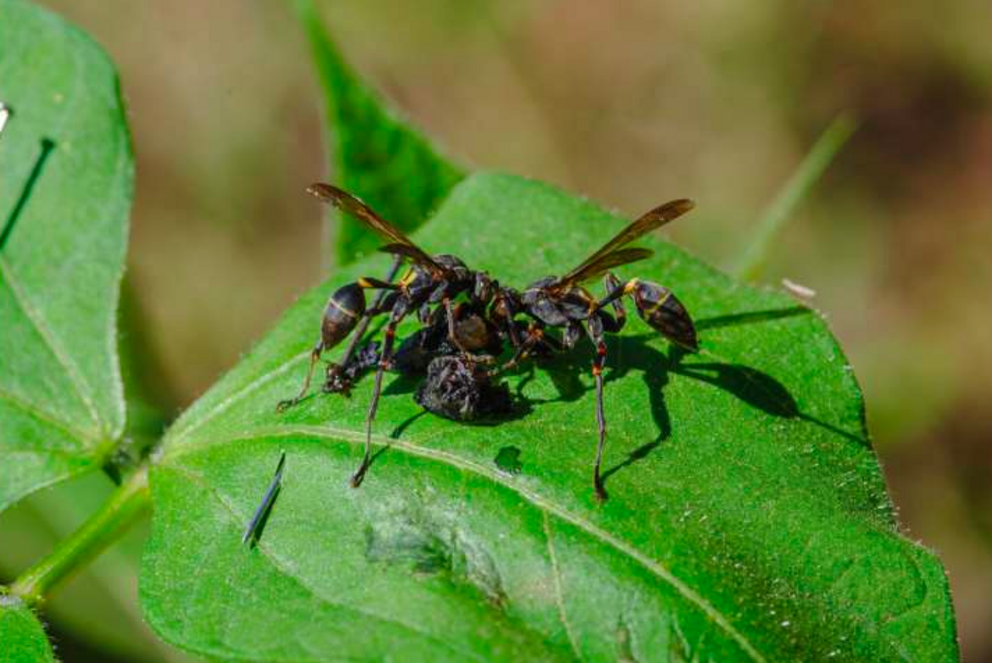
As expected, wasps frequently attacked caterpillars on normal bean plants. But around 40% fewer attacks occurred on plants with the missing inceptin receptor, both when treated with caterpillar saliva and pure inceptin. There was no difference in attacks between plant pairs that received only razor cuts and water. This suggests that physical wounding of a leaf, on its own, is not sufficient to trigger the release of the specific airborne chemicals that attract the wasps.
 Credit: Brian Behnken
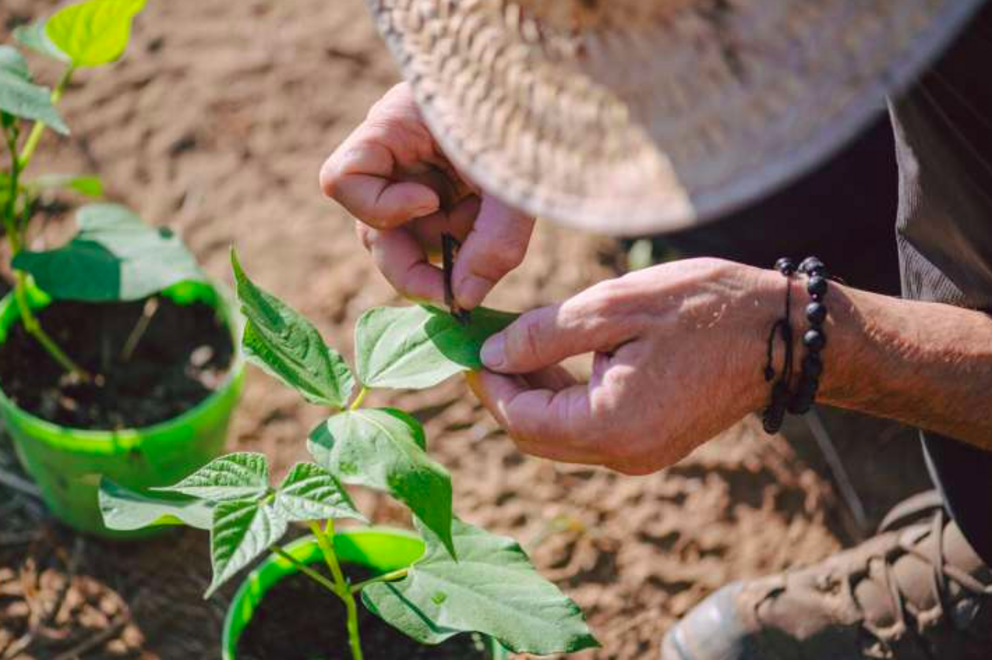 Credit: Brian Behnken
"Our findings establish a direct link between the molecular recognition of herbivores and ecologically relevant tritrophic outcomes," commented the team in their paper. "INR mediates the In11-triggered recruitment of natural enemies in the field."
Insights from this research could one day help farmers breed crops with stronger natural defenses, reducing reliance on chemical pesticides.
Edited by Gaby Clark, reviewed by Robert Egan