Unknown 4,000-year-old stone circle in Belfast uncovered by archaeologists
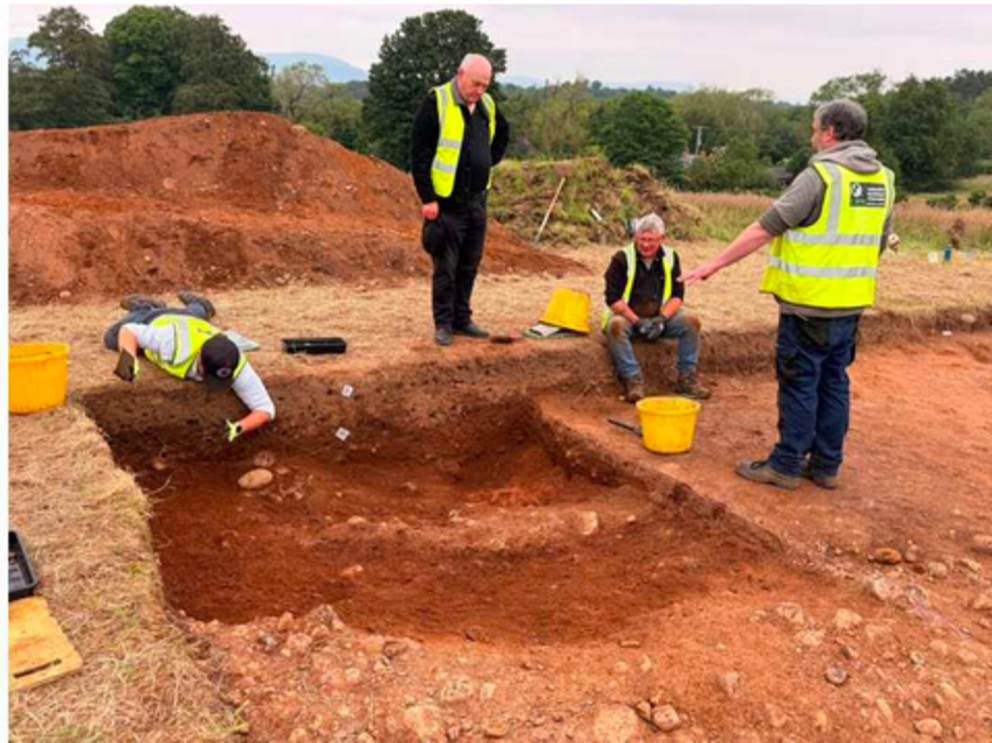
Archaeologists have uncovered an unknown stone circle that dates back at least 4,000 years to the Late Neolithic or Early Bronze Age and was most likely used for ritual activities.
The discovery was made near the Giant's Ring, just outside Belfast, during a community archaeology excavation led by Brian Sloan from Queen's University.
The site came to the team's attention after they saw aerial photography highlighting several crop marks that extended farther than previously thought.
Sloan, who works in the School of Natural and Built Environment at Queen's, explains, "In the 1990s, Queen's archaeologist Barrie Hartwell uncovered a "Neolithic Temple' at the Giant's Ring. This included a large timber circle with an internal excarnation platform. It is believed that this was used for processing dead bodies.
"We came across aerial photography of the area and noticed a number of crop marks in the field, which suggested the Ballynahatty Ritual Complex extended further than we first thought.
 Credit: Queen's University
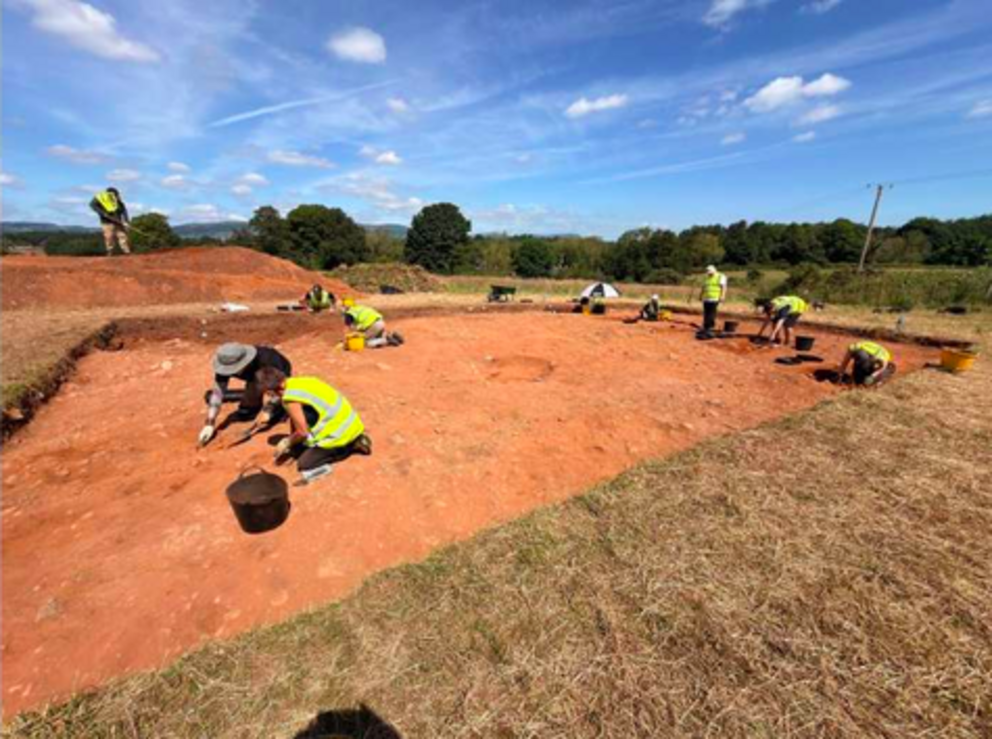
"We decided to dig deeper and work with community volunteers and schoolchildren to try to piece together the area's hidden history."
The excavation, which has been running during June, was organized by the Community Archaeology Programme Northern Ireland (CAPNI). It is still ongoing but has already revealed some interesting findings.
Sloan comments, "The field we are digging in forms part of the wider "Ballynahatty Ritual Complex'—a collection of some 50 or more known archaeological monuments spanning the southern end of the Malone Ridge.
"There is no evidence yet that what we are excavating is associated with any burials. We have discovered that the crop mark seems to be a stone circle dating back to the Late Neolithic/Early Bronze Age. Unfortunately, this was disturbed in the 19th century when farmers in the area dismantled sites that were getting in the way of agriculture.
"The function of stone circles remains a bit of a mystery. A great deal of effort is required to construct them, but what they were actually used for is open to debate. There is a chance that they were used for religious ceremonies, gathering at certain times of the year. Some stone circles, such as the site at Beaghmore, Co. Tyrone, have celestial alignments and could have been used as a prehistoric calendar."
Sloan adds, "It has been fantastic to work alongside community volunteers and schoolchildren to try to piece together the history that lies beneath us. They have battled both heavy rain and scorching sunshine over the last few weeks, and we're delighted with what they've helped uncover.
"One highlight was when a pupil called Harper from Finaghy Primary School found a broken arrowhead. It's brilliant to see the enthusiasm of these schoolchildren, who may be the next generation of archaeologists."
Provided by Queen's University
Edited by Gaby Clark, reviewed by Robert Egan