
Hidden mega-structures beneath Egypt's Giza pyramids are 'confirmed' by scientists
A team of Italian scientists took the world by storm last March when they announced the discovery of a colossal underground complex plunging nearly 3,500 feet beneath Egypt's Giza Plateau and linking chambers the size of city blocks.
Now Filippo Biondi, the radar engineer who developed the imaging method, has gone public with evidence that he said leaves little room for doubt.
In a new interview on Jesse Michels' American Alchemy podcast, Biondi revealed that four independent satellite operators, Umbra, Capella Space, ICEYE and Italy's Cosmo-SkyMed, all returned identical raw tomography data showing the same structures.
'All four satellites gave exactly the same results,' Biondi said. 'That is really amazing. We cannot announce anything without these basic scientific methods.'
Using a technique he pioneered called synthetic aperture radar Doppler tomography, Biondi's team measures microscopic vibrations on the Earth's surface.
Those vibrations carry acoustic 'fingerprints' from objects thousands of feet underground, allowing the software to reconstruct 3D images even though the radar waves themselves never penetrate the soil.
The scans reveal eight massive hollow cylinders dropping straight down from the base of the Khafre pyramid, the middle of the three great pyramids.
Each shaft has a central column wrapped in perfect helical coils and terminates more than 3,500 feet below the plateau in 260 × 260 × 260-foot cubic chambers, larger than most modern sports arenas.
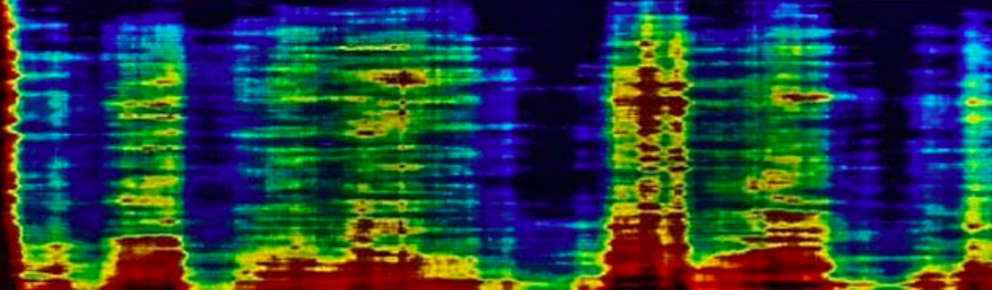
The Italian scientists who claimed to have found hidden structures beneath Egypt's Giza pyramids said four independent satellite operators all returned identical raw tomography data showing the same structures
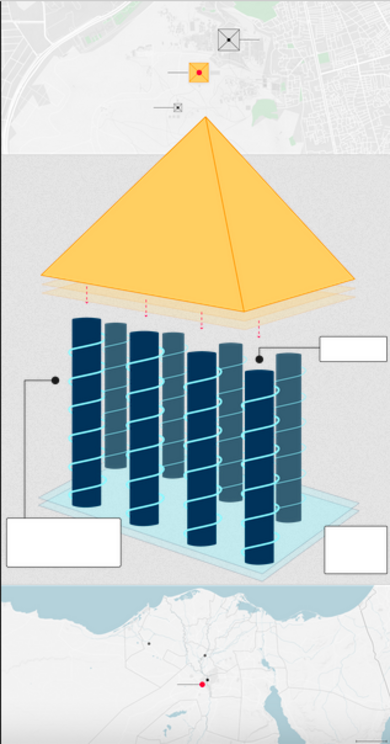
'The pyramids are the tip of the iceberg,' Biondi declared. 'It's just a hat to complete something that is located underneath. The substance is below.
'When asked if the spirals could be natural formations, he shot back: "100 percent. It's man-made. You do not find perfect coils like this in geology".'
However, many mainstream experts, including Egyptologist Dr Zahi Hawass, have dismissed the findings as 'fake news' since they were announced this spring.
Hawass has pushed back on the claims, arguing that the radar technology cannot penetrate beneath the pyramid to the extent the Italian researchers suggest
But the criticism has not stopped the Italian researchers, as they have found the same signature in smaller form under the third pyramid, Menkaure, and as a single giant shaft beneath the Sphinx.
Identical spiral-shaft geometry was also detected 30 miles away at Hawara, the site ancient writers called the Labyrinth.
The Giza complex consists of three pyramids, Khufu, Khafre and Menkaure, built 4,500 years ago on a rocky plateau on the west bank of the Nile River in northern Egypt.
So far, the team has measured a depth of over 3,280 feet, more than half a mile down.
The structures appeared like tubes, a total of eight, descending from the base of the pyramid to what looked like huge chambers more than 260 feet wide and 260 feet high, sitting at the bottom.

Filippo Biondi (left) made the announcement while speaking with podcast host Jesse Michels
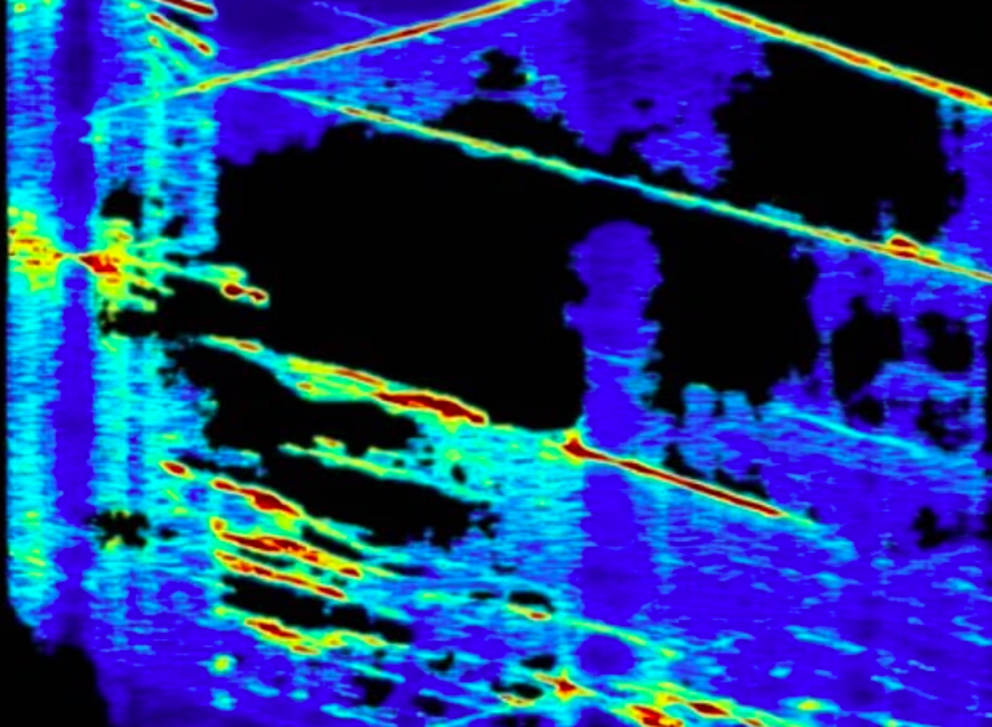
The team said the technology captured enormous chambers (pictured) at the bottom of the shafts
The scans also captured a spiral-like structure around each of the eight shafts.
Biondi admitted he and his team do not know the purpose of these structures, but theorized the spirals could be stairs or cables wrapped around each one.
'I can say that this structure, the tubes extending beneath the pyramid, seems to be related to information,' he said.
'Generating energy is a kind of information. Information is everything.'
To silence skeptics who claimed the images were AI hallucinations, Biondi pointed to blind tests, including his method perfectly imaged Italy's Gran Sasso underground physics laboratory, buried inside a mountain 125 miles away, with 100 percent accuracy.
The team has already submitted a formal proposal to Egyptian authorities under the Khafre Research Project.
The plan requires no drilling, as existing shafts between the Sphinx and Khafre pyramid, currently filled with centuries of debris, appear in the scans to be service entrances leading directly into the kilometer-deep complex.
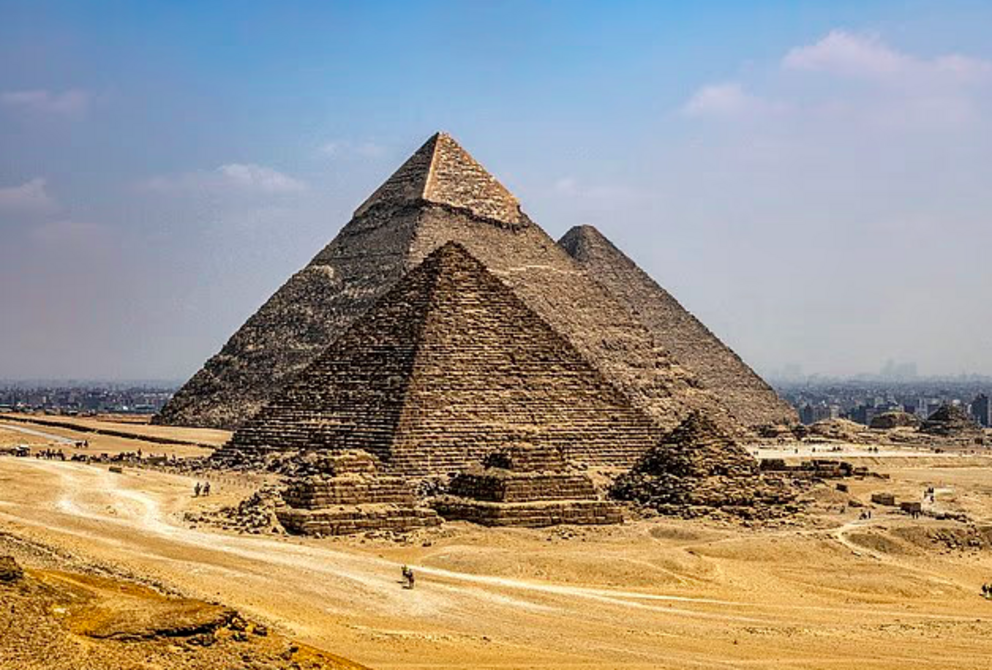
The iconic pyramids of Giza are already one of the world's greatest enigmas. But in March, the mystery deepened when a team of Italian scientists said they found a vast city and network of tunnels stretching thousands of feet below the Egyptian structures
'We only need permission to clean them and descend,' Biondi said. 'If they approve before the end of this year, physical exploration could begin in 2026.'
Podcast host Jesse Michels, visibly stunned, closed the interview with: 'After this conversation, I'm convinced on a lot of it.
'These kinds of discoveries are speeding up. Humanity feels ready.'