
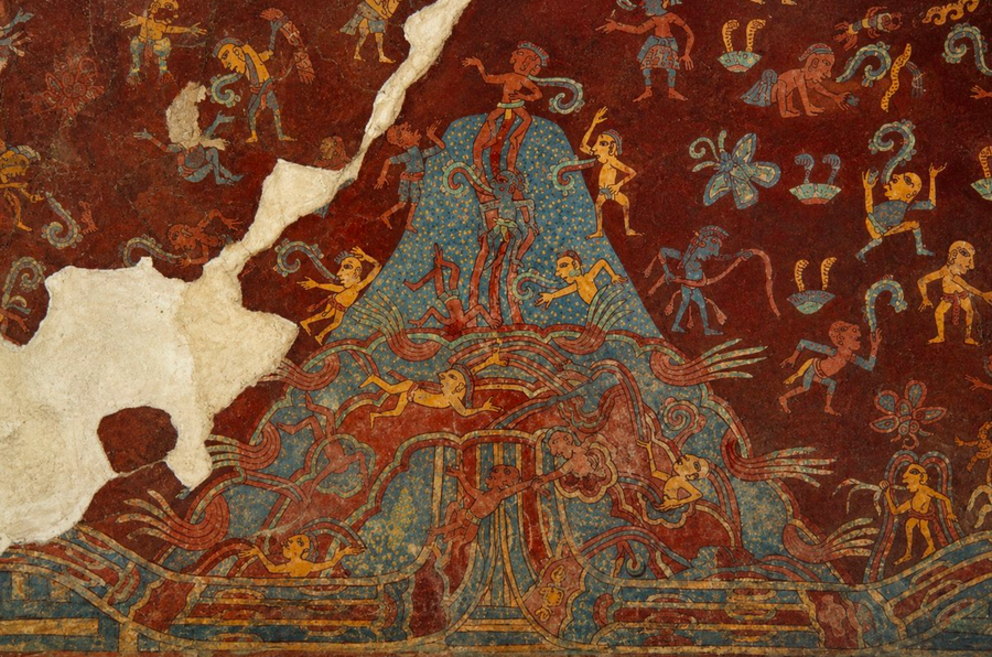
Has the mystery of the Tepantitla mural finally been solved?
An archaeologist working with Mexico’s National Institute of Anthropology and History (INAH) believes the famous Tepantitla mural at Teotihuacan may depict an agricultural festival dedicated to the rain god Tlaloc, rather than the divine paradise traditionally linked to the deity.
The proposal comes from Jaime Delgado Rubio, who argues that the mural shows scenes connected to the Etzalcualiztli festival, a seasonal celebration held to give thanks for rain and successful harvests.
For decades, the dominant interpretation came from archaeologist Alfonso Caso, who identified the mural as a representation of Tlalocan, the paradise of Tlaloc in Mesoamerican religion.
Delgado Rubio disagrees. He believes the mural reflects activities taking place in the real world, not a supernatural setting.
His research combines visual analysis of the mural with historical sources, including writings by the 16th-century friar Bernardino de Sahagún. In his chronicles, Sahagún described the Etzalcualiztli festival, named after a ceremonial dish made from maize and beans.
Delgado Rubio says several details recorded by Sahagún resemble scenes painted in the mural.
Located inside a residential compound at Teotihuacan, the mural once covered roughly 100 square metres. Only a portion survives today, with red remaining the dominant colour.
The artwork is divided into three sections.
The first appears to show preparations for ceremonies linked to water and offerings. People gather reeds, perform rituals and prepare to climb a mountain.
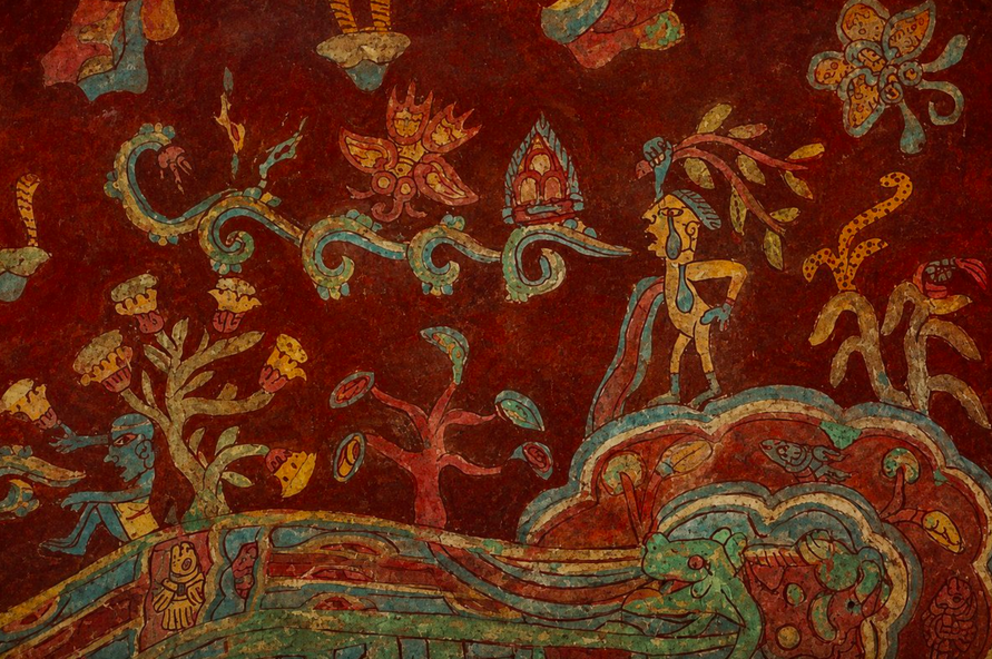 Image Credit : Rafael Morales Orozco
Another scene shows workers assembling viewing platforms for a stick-ball game. Some participants wear detailed clothing and elaborate headdresses, which may identify them as members of the elite.
The final section centres on healers visited by people seeking treatment for illnesses.
“It is worth noting that in all the images, people with particular clothing can be identified, so Delgado Rubio believes that they were foreigners invited to pay tribute to Tláloc and the ruling elite, to whom they were probably subject,” said INAH.
Excavations at the ancient city have produced evidence of communities connected to Oaxaca, Veracruz, Puebla and the Maya region, along with signs of Purépecha and Nahuatl presence.
According to Delgado Rubio, the mural may also reflect Teotihuacan’s political power and its relationships with surrounding populations through tribute and ceremonial gatherings.
He also highlighted one unusual feature: the deity appears less severe than in other known depictions of Tlaloc, almost as if observing the celebrations with curiosity.
The interpretation builds on earlier research by archaeologist Jorge Angulo.
A documentary examining the theory, The Great Festival of Teotihuacan: The Tepantitla Mural, directed by Rafael Morales Orozco, will premiere on YouTube on 15 May 2026.
Delgado Rubio said the interpretation remains open to debate among researchers.
Sources : INAH